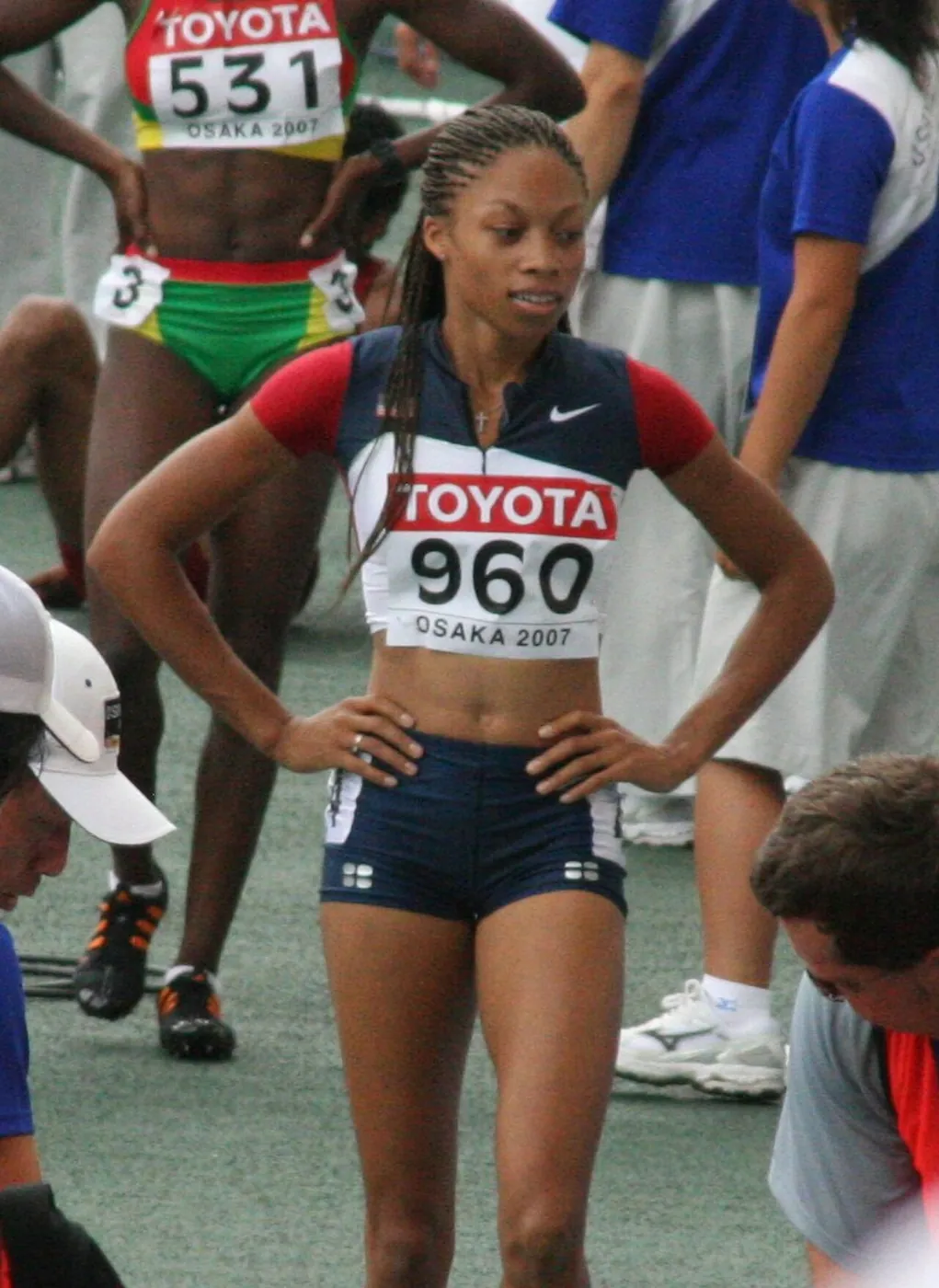
American sprinter Allyson Felix competed in the 200m, 400m and relays over multiple Olympic cycles. She won the women's 200m at London 2012 and collected Olympic medals across several Games. Her career is particularly useful for understanding how different distances and team responsibilities alter the same athlete's competitive task.
Two distances, different demands
Both the 200m and 400m include bend running, but they do not require identical effort distribution. The shorter event emphasises sustained high speed; the longer one places greater pressure on maintaining movement under late-race fatigue. Compare Felix's transition onto the straight and her closing rhythm within the context of each distance.
Reading a long career accurately
Across several Olympic cycles, opponents, circumstances and team responsibilities change. Individual and relay medals should be identified separately rather than treated as records in a single event. Sustained competitiveness and adaptability are meaningful qualities alongside a peak performance, but they describe different aspects of a career and should not be collapsed into one statistic.
Separate relay splits from individual results
A relay adds exchanges and leg assignments to the running task. Its splits can involve different starting and timing conditions from an individual race, so they should not simply be placed alongside official individual times. Identify event, round and role before comparing performances, allowing Felix's team contribution to remain visible.