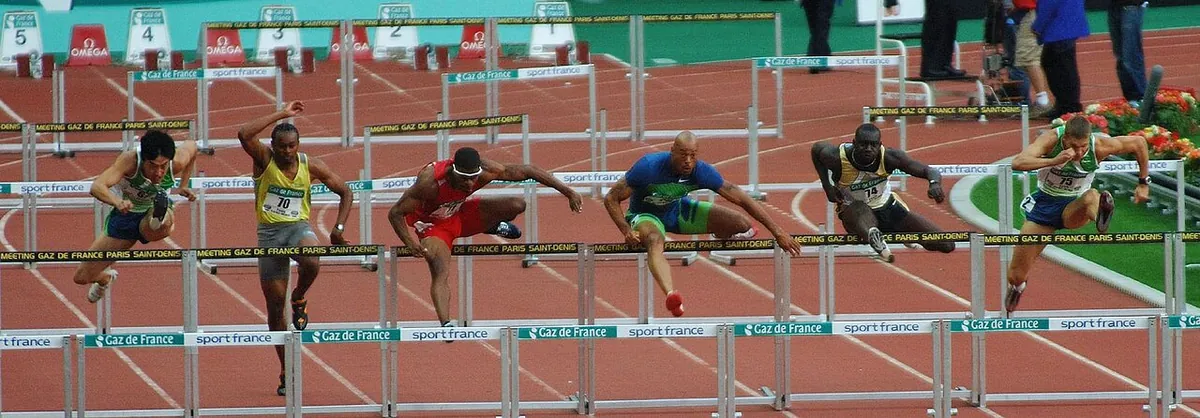
China's Liu Xiang won the men's 110m hurdles at the 2004 Athens Olympics in 12.91 seconds, equalling the world record at the time. That specific historical result anchors his profile. The event itself combines sprint speed with precise spatial control rather than ten separate jumps.
What the Athens race represented
The Olympic title marked a major breakthrough for Chinese men's sprint hurdling. To understand the performance, watch the start, approach to the first hurdle, repeated hurdle rhythm and run-in together. Each barrier creates a technical demand, but the overall task remains a continuous race towards the finish. No single clearance explains the complete result.
A career includes different outcomes
Liu's career also included injury and races he could not complete. Neither one title nor one withdrawal defines the whole athlete. A chronological reading of public results distinguishes competitive outcomes from physical circumstances and outside expectations. Technical observations can be grounded in footage without inventing private thoughts or unsupported explanations.
Ten connected decisions
Treat every hurdle as a point within the same running sequence. The take-off, clearance and first landing step must leave the athlete ready for the next barrier. Pair video with the official result: one shows movement, the other establishes historical outcome. A brief mistake or an isolated highlight cannot adequately summarise the wider career.