The 1500m combines speed and endurance in a shared racing space. Some races develop at a demanding pace from the beginning; others concentrate the contest into a late surge. Finish time alone cannot explain the decisions made inside the group.
Following and choosing a route
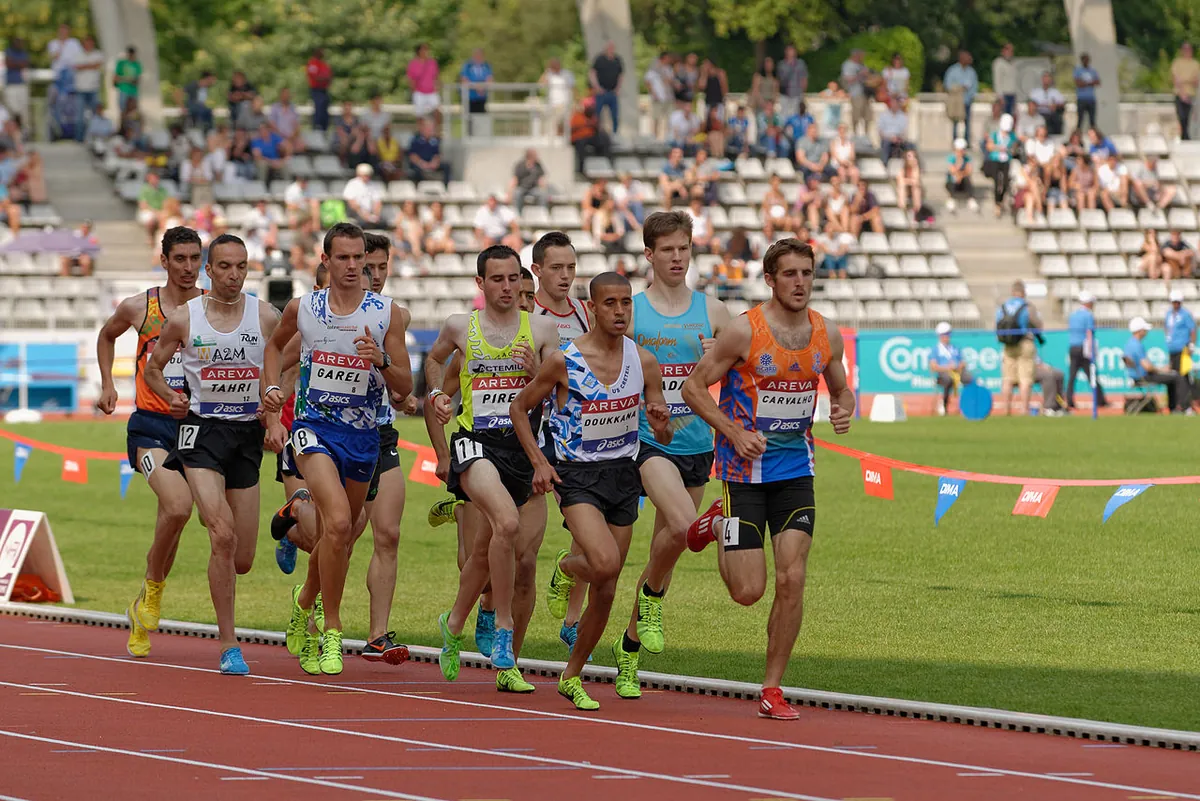
Following another runner can reduce the burden of leading, but an athlete still needs room to respond. The inside offers a shorter route and the possibility of being boxed in. Moving outside creates passing space at the cost of extra distance. The best choice depends on remaining distance, available energy and the pace of nearby opponents.
Reading the final lap
A decisive move may begin on the last lap or earlier. Going first can secure position but requires a longer effort at speed. Waiting can preserve energy while allowing an overtaking route to close. Track who initiates a surge, who must run around others and who still has room to accelerate on the straight.
Waiting or losing contact?
A runner near the back may be conserving effort, but repeated surges can turn that position into a disadvantage. Watch the physical gaps as well as the ranking. A runner can remain in the same place while losing contact with the athlete ahead. Tactical choices make sense only against the overall rhythm of the race.