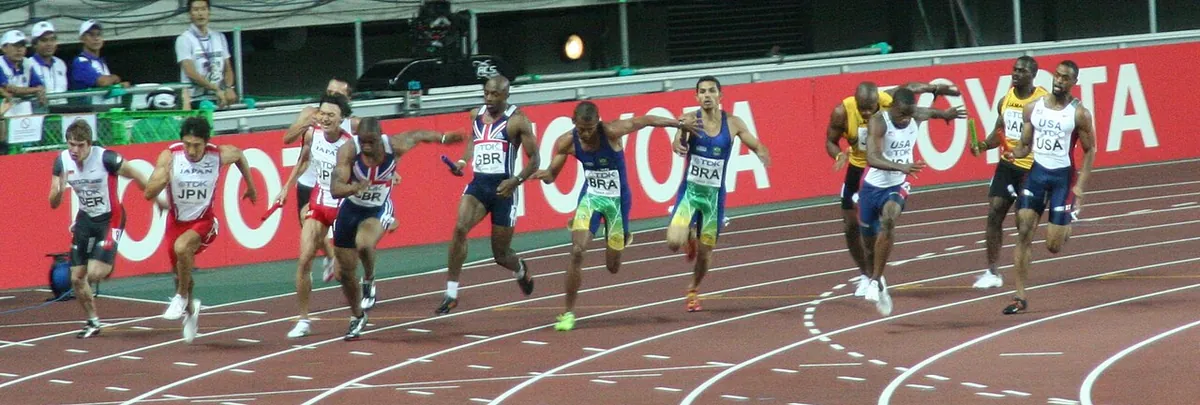
In the 4x100m relay, four runners carry the baton in sequence and transfer it within regulated zones. The baton provides the continuous thread of the race. Watching only the athletes' positions can hide the speed lost or preserved during an exchange.
Two speeds must meet
The outgoing runner accelerates as the incoming runner approaches. Starting too early can make the exchange difficult to complete; starting too late can reduce the speed carried away. Marks, acceleration patterns and communication must work together. The baton position during the transfer matters for legality, rather than simply whether both runners' feet appear inside the zone.
Different jobs on different legs
The first runner starts from blocks and negotiates a bend. Middle runners combine receiving, sprinting and passing, while the anchor finishes the race. The fastest individual runner need not occupy one fixed position. Bend-running ability and exchange compatibility also matter, so personal bests alone cannot predict the team's result.
Replay the outgoing runner's start
Slow motion naturally draws attention to the passing hand, but the receiver's first movement is equally important. Follow both runners before, through and after the zone. Then check the transfer location instead of isolating the instant when their hands meet. Reliable exchanges are what allow four separate sprint performances to become one team time.