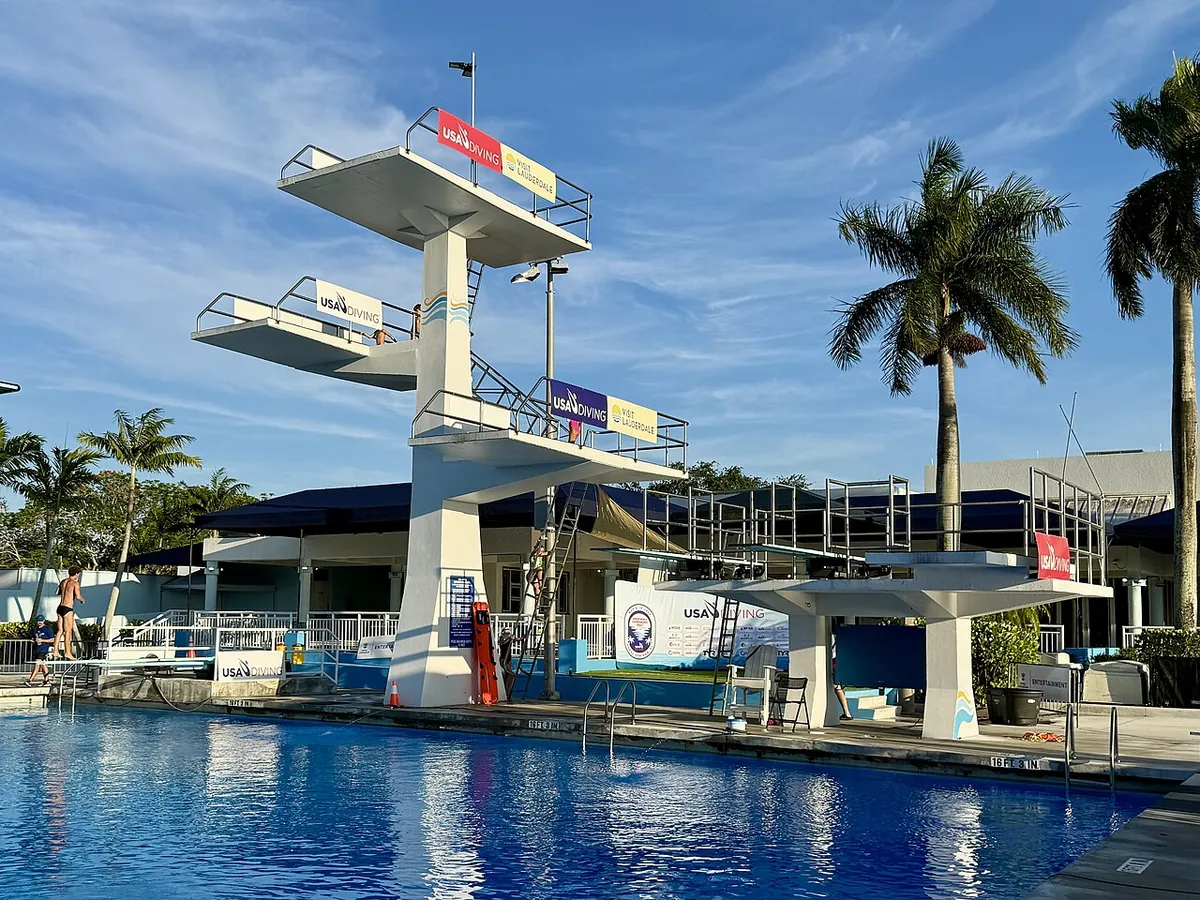
A springboard flexes, while a platform provides a fixed surface. The familiar Olympic 3m springboard and 10m platform therefore pose different take-off tasks. Identify the apparatus before judging the preparation and departure. Similar airborne rotations do not mean that both events should begin with the same rhythm.
Working with the board
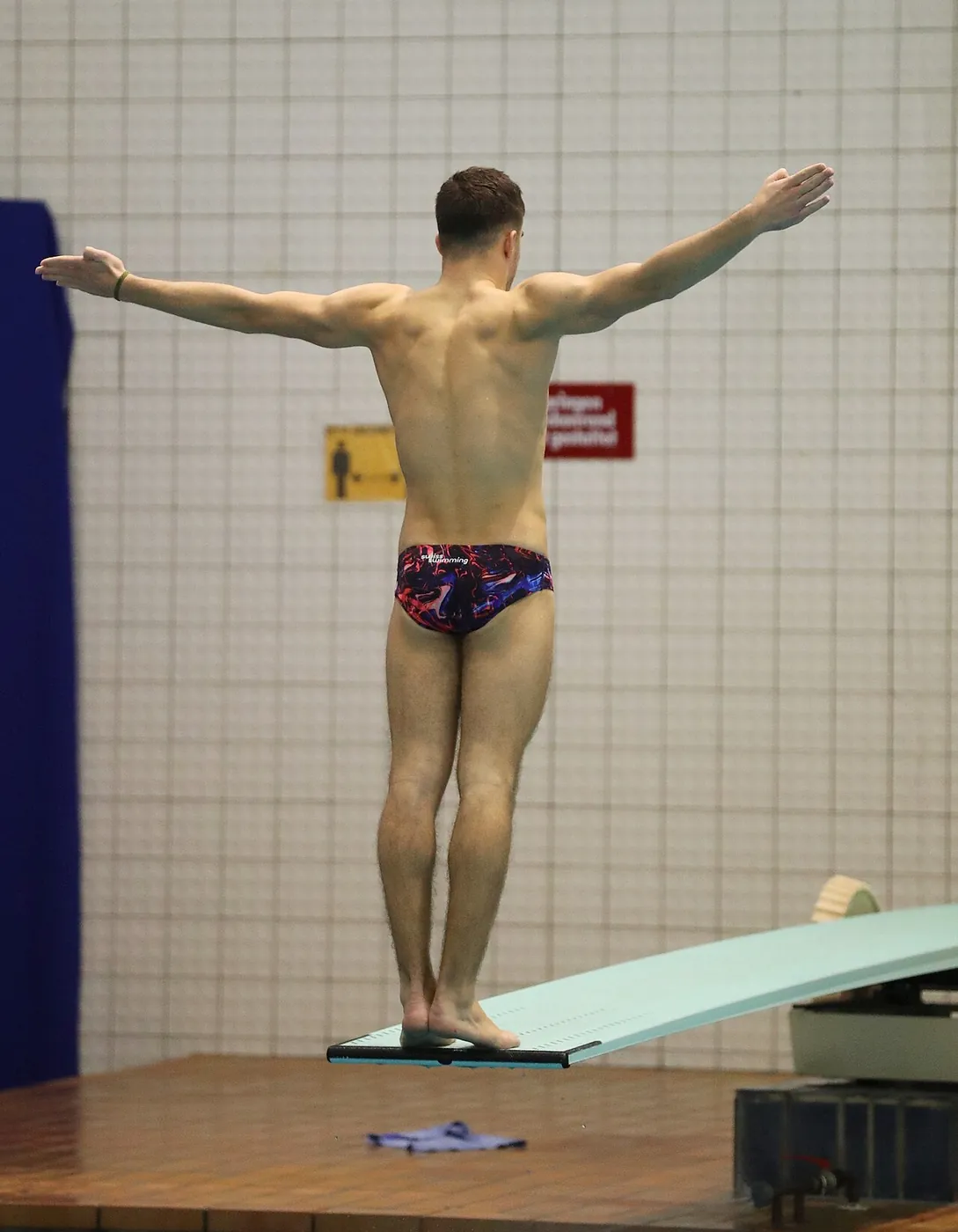
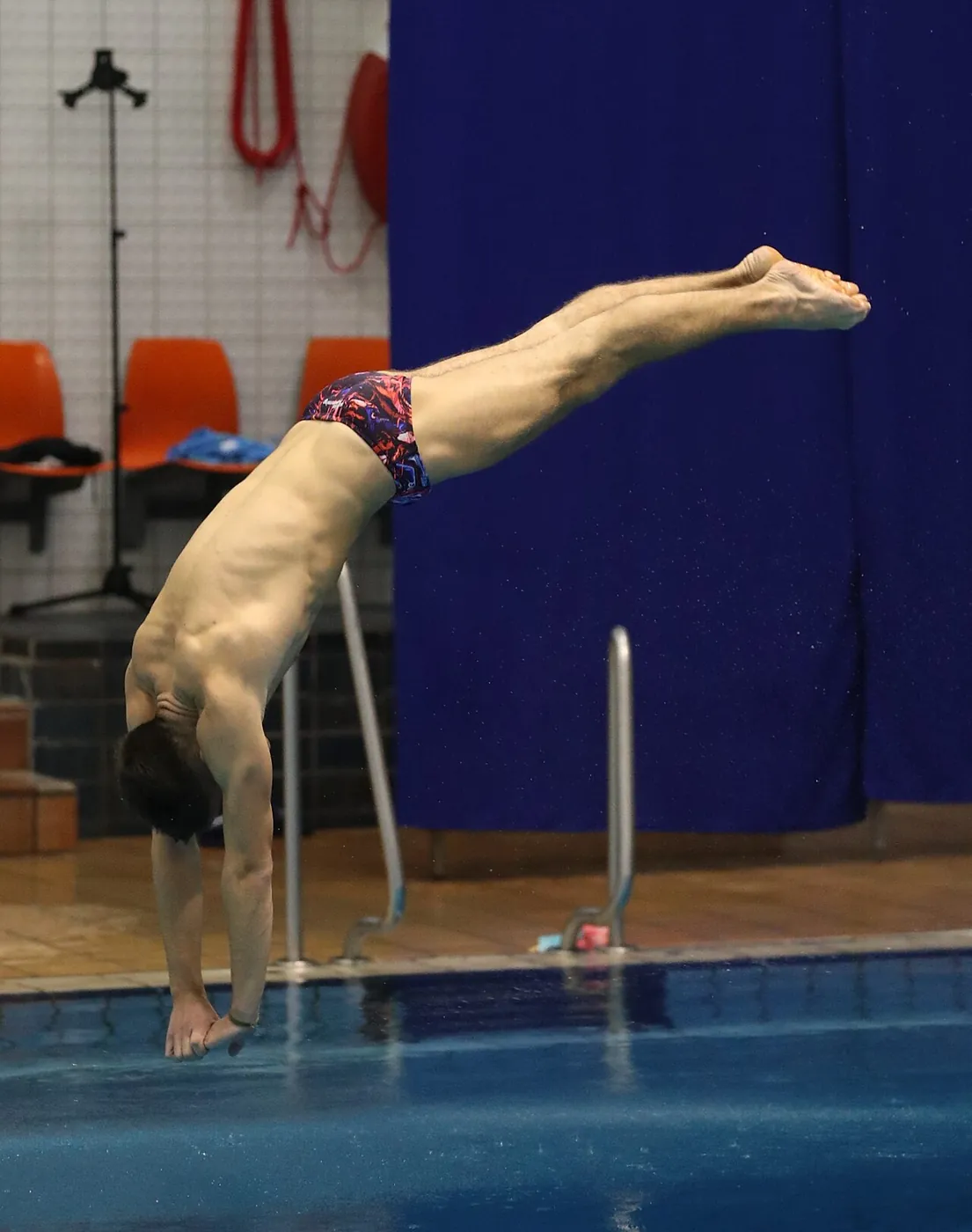
A springboard diver coordinates body movement with the board's downward movement and rebound. Position, timing and control influence the height and direction of departure. The visible preparation is part of the action rather than an unnecessary delay. A board bending noticeably does not by itself establish an effective take-off; the following flight and entry provide essential context.
Leaving a fixed surface
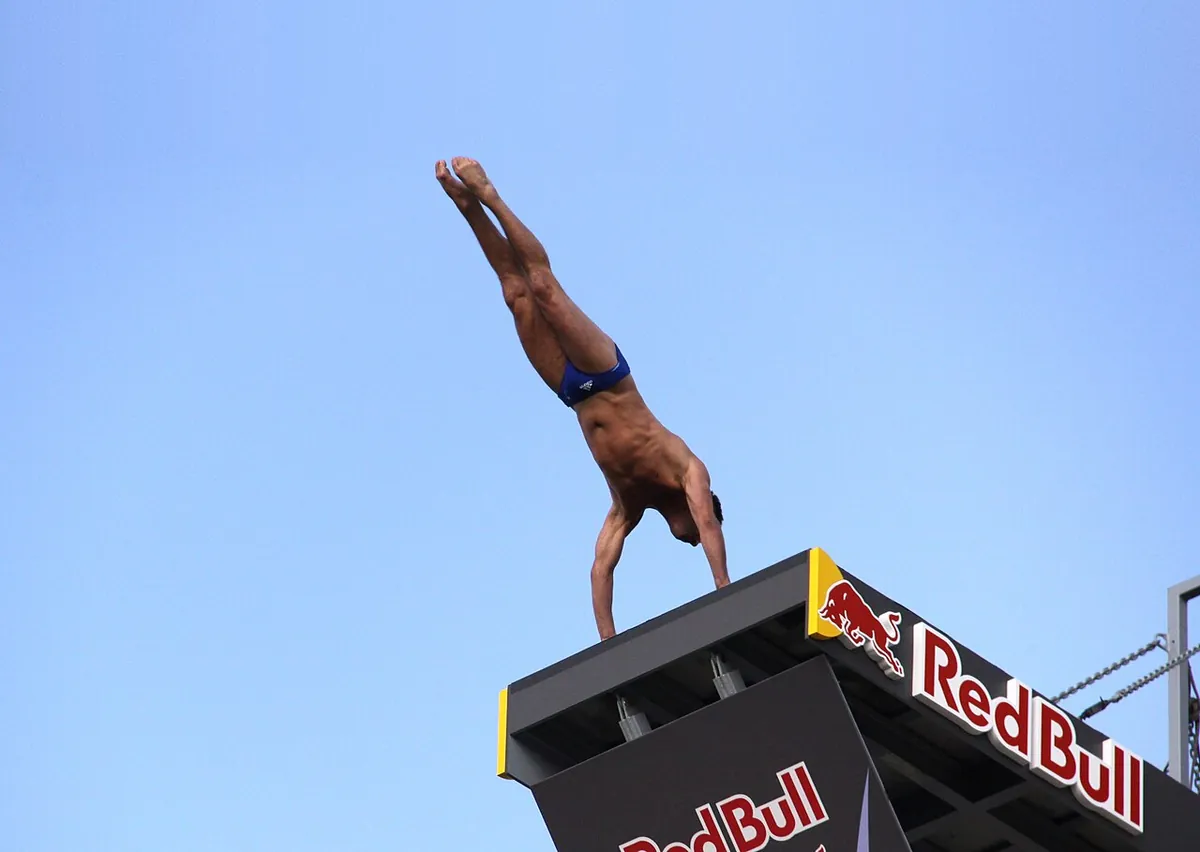
On platform, the diver creates the departure through movement against a stable support. Depending on the group, the starting position may face towards or away from the water, or involve an armstand. Watch the resulting space and body alignment, and consider the intended difficulty. Greater height does not make every movement automatically easier to complete.
Compare the moment of departure
First compare the preparation and the instant just after leaving the apparatus. Springboard timing must work with elastic feedback; platform timing develops from a fixed starting surface. Both events subsequently require airborne control, but one event's preparatory movement is not a universal standard for the other. Recognising that difference makes the technical character of each clearer.