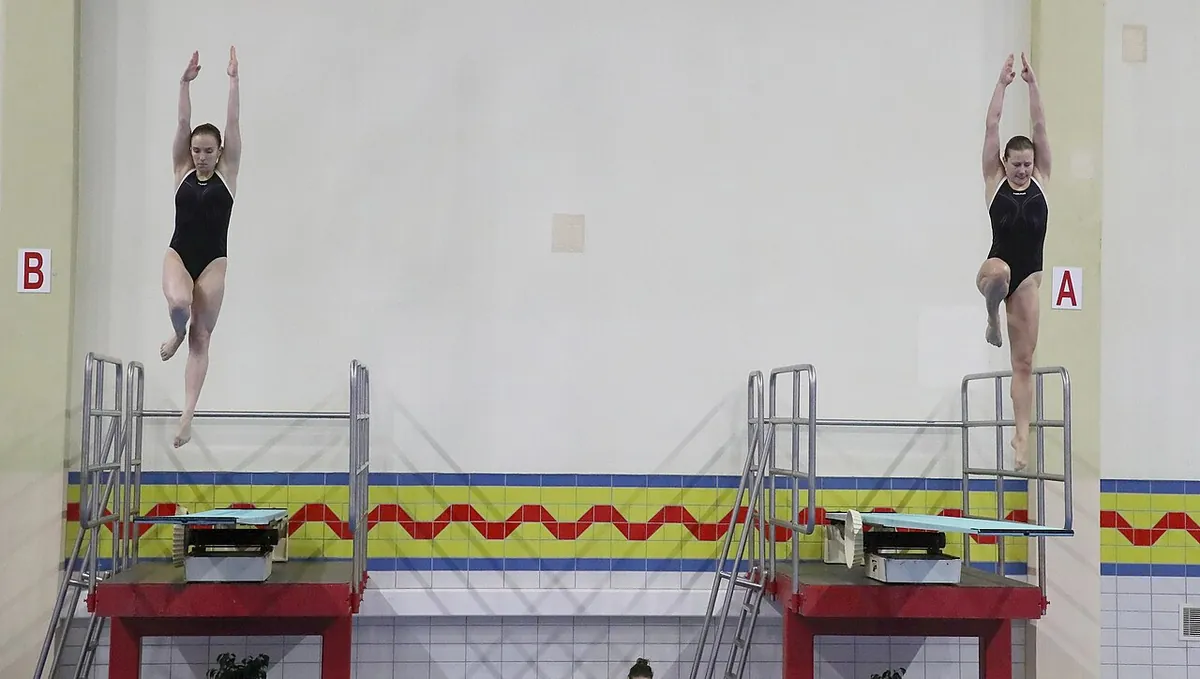
Synchronised diving places two athletes' movements within the same visible sequence. World Aquatics judging distinguishes individual execution from the quality of their coordination. Two excellent individual dives do not automatically form the strongest pair, while perfect-looking timing cannot erase every execution problem. Both dimensions belong in the analysis.
Matching a process rather than a body shape
Partners may differ in physique and movement habits, yet must coordinate the start, development of flight and entry. Watch departure times, the highest points and the timing of opening. Synchronisation is not a demand for identical body proportions; it is the challenge of making two complete movements correspond through shared technical stages.
How the judging perspectives differ
Individual execution considers each diver's performance. Synchronisation considers their relationship. One athlete's error can affect the dive, while a timing gap can also matter even if both individual entries are otherwise strong. Different camera angles reveal different information, so the two splashes alone cannot explain the full result or its component marks.
Follow two timelines
Note the take-off, opening and entry for each diver, then compare corresponding moments. Similar positions do not necessarily occur at the same time, and simultaneous actions do not prove that both were executed without fault. Slow motion makes these distinctions easier to see, but the official judging method remains the basis for the score.