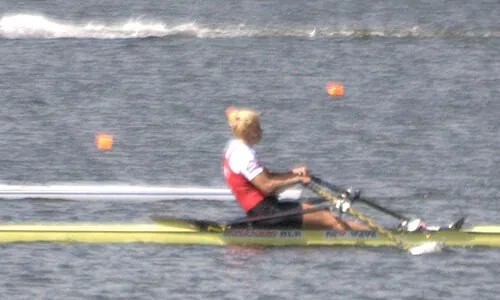
Belarusian rower Ekaterina Karsten is associated with outstanding performances in women's single sculls. With only one rower in the boat, the athlete supplies the effort while independently managing balance, direction and race rhythm. Her races provide a clear view of how personal technique becomes boat speed, without a crewmate sharing the immediate task of coordination.
Two Olympic titles
Karsten won women's single-sculls gold at Atlanta 1996 and Sydney 2000 and remained competitive internationally across several seasons. Naming the boat class is essential because the achievement is not technically identical to success in a crew boat or sweep event. The number of athletes and oars changes the organisation of the movement.
Coordinate both sides
A single sculler controls one oar in each hand, requiring the two sides to create balanced propulsion. Small differences can affect direction or stability. In Karsten's races, watch the controlled recovery and the way the blades establish support at the catch. Effective motion is not simply forceful pulling but a continuous relationship between the two oars and hull.
Independent race decisions
Without a teammate sharing the rhythm, the single sculler must judge speed and fatigue directly. Establishing an early position, sustaining efficient work in the middle and deciding when to accelerate all need to suit the athlete's condition. Her performance is best understood by considering physical capacity, technical consistency and race reading together.