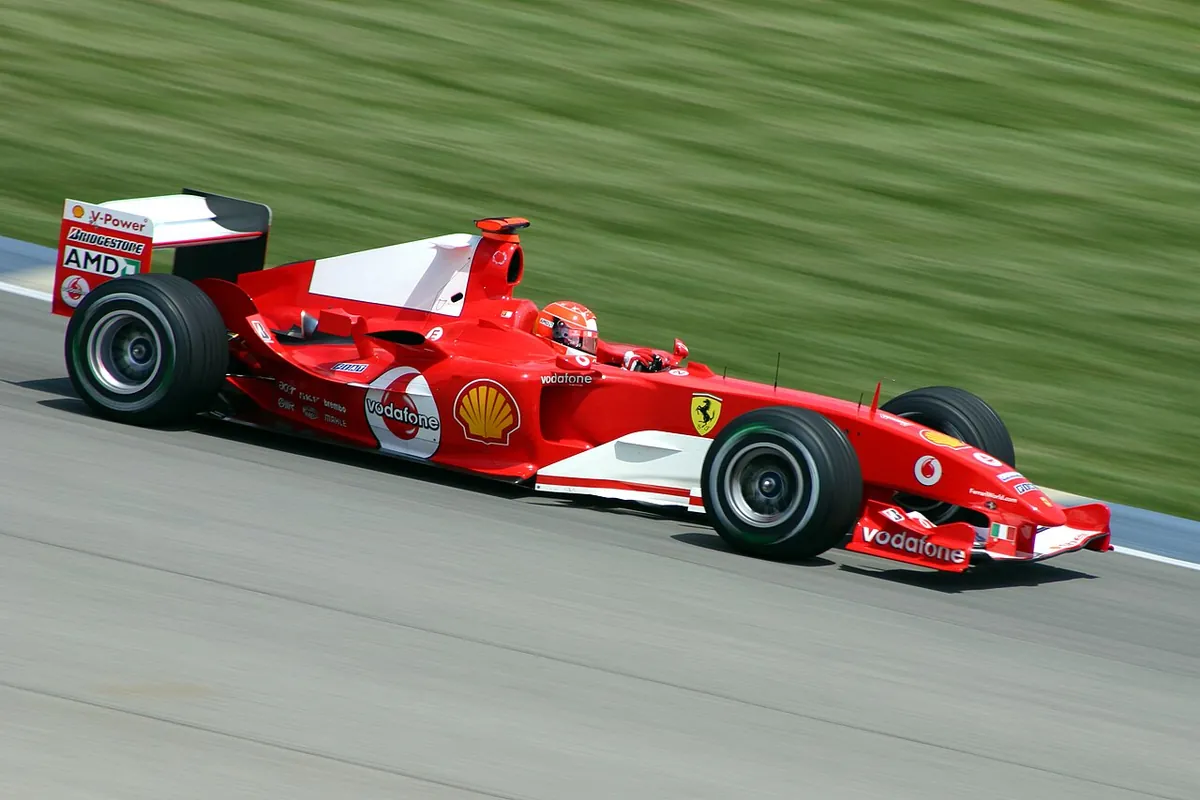
Michael Schumacher is one of Formula One's defining historical figures. His career linked Benetton, Ferrari and Mercedes, providing a useful perspective on the relationship between a driver and an engineering organisation. Understanding his achievements requires more than identifying a fast lap: execution, development and the way a team works over successive seasons all belong in the picture.
The championship years
Schumacher won the drivers' championship with Benetton in 1994 and 1995, then won five consecutive titles with Ferrari from 2000 through 2004. Those fixed years show success in different team environments. A championship represents performance accumulated across a season, so neither one dramatic overtake nor a single qualifying result can explain it fully.
Pace and operational execution
A driver must sustain speed within the limits imposed by tyres, fuel and the car's condition. In Schumacher-era footage, follow the sequence of laps around a pit stop and the team's use of clear track. Regulations differed from today's, and strategies involving refuelling need to be understood within the rules of their own period.
A balanced historical view
His career includes exceptional results and disputed on-track episodes. Reliable coverage distinguishes official classifications, stewards' decisions and personal assessments. Comparisons across generations also need to account for calendar length, points systems and reliability. These differences do not prevent historical discussion, but they make a single numerical ranking an incomplete account of achievement.