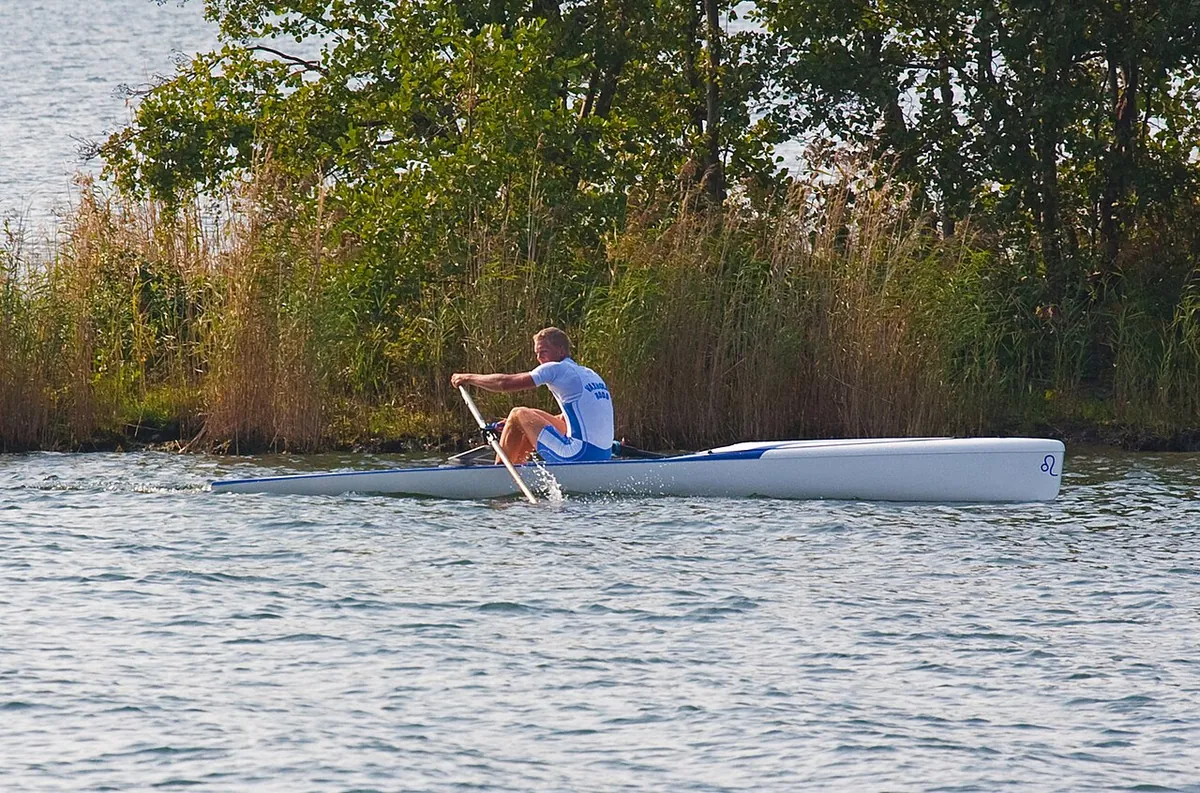
The traditional senior international flat-water rowing distance is 2000 metres. Athletes must deliver a demanding effort while preserving effective technique. Other events, age groups and rowing formats can use different distances, so the course should be identified before applying a pacing model. In the standard race, the start, middle and finish are connected phases rather than independent contests.
Build speed from rest
The start brings a stationary boat up to speed and establishes a position in the field. Short, quick opening strokes differ from the rhythm used once the boat is moving efficiently. An early lead can help, but excessive expenditure may have a later cost. The fastest-looking start is not automatically the best complete race.
Sustain useful propulsion
Through the middle, the crew balances stroke rate against the effect of each stroke. Raising the rate does not guarantee more boat speed if movements shorten or timing deteriorates. Compare the displayed rate with changes in relative position to see whether an acceleration actually produces progress rather than merely more visible activity.
Finish with what remains
A final increase in rate and pressure depends on remaining capacity and retained technique. Crews may react to an opponent or follow a planned point of attack. Evaluate the full pattern rather than treating the absence of a conspicuous final sprint as evidence of poor commitment or an inadequate tactical decision.