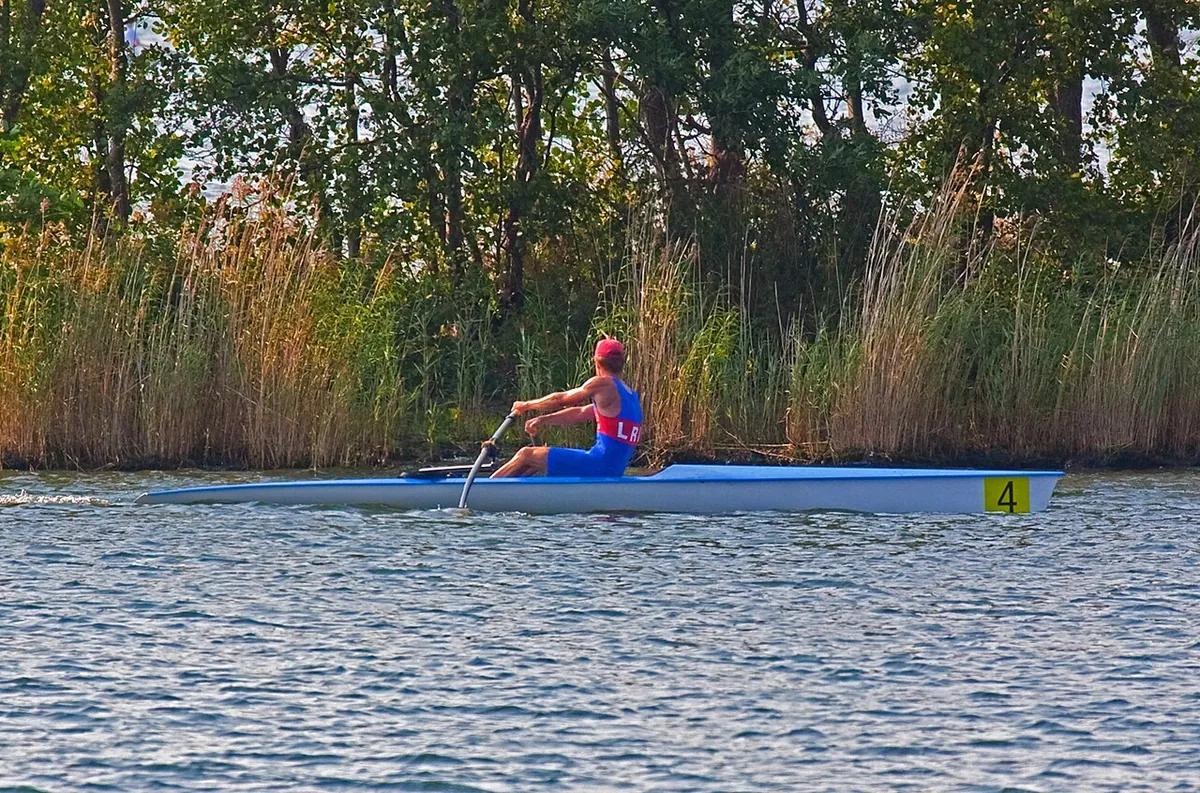
In rowing, sculling means that each athlete uses two oars, while sweep means each uses one. The distinction does not describe the total number of oars in the entire boat. Both convert physical effort into propulsion through water, but they organise balance, body movement and cooperation differently. Recognising this is a foundation for understanding boat classes.
Two sides under one athlete's control
A sculler independently controls a left and right oar, coordinating propulsion and recovery across the boat. Doubles and quadruples add the need to coordinate between athletes as well. The crew is not just several single-sculling movements placed together. Watch the simultaneous catches and whether the hull remains balanced through the cycle.
One side within a crew
Sweep rowers work on an assigned side, with the overall arrangement balancing propulsion. Their movements have a directional character that makes coordination especially important. Each athlete producing the quickest personal stroke is not enough. Catch, drive and recovery must belong to a shared rhythm if the individual effort is to move the boat effectively.
Avoid a simple difficulty ranking
A visually symmetrical action is not necessarily easier, and teamwork does not reduce the importance of individual technique. Experience and physical characteristics influence how an athlete adapts between the formats. Comparing the control and cooperation tasks is more useful than declaring one universally harder without specifying the athlete or circumstances.