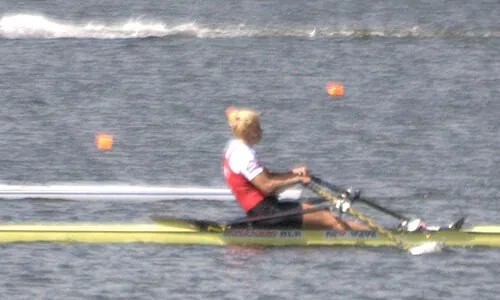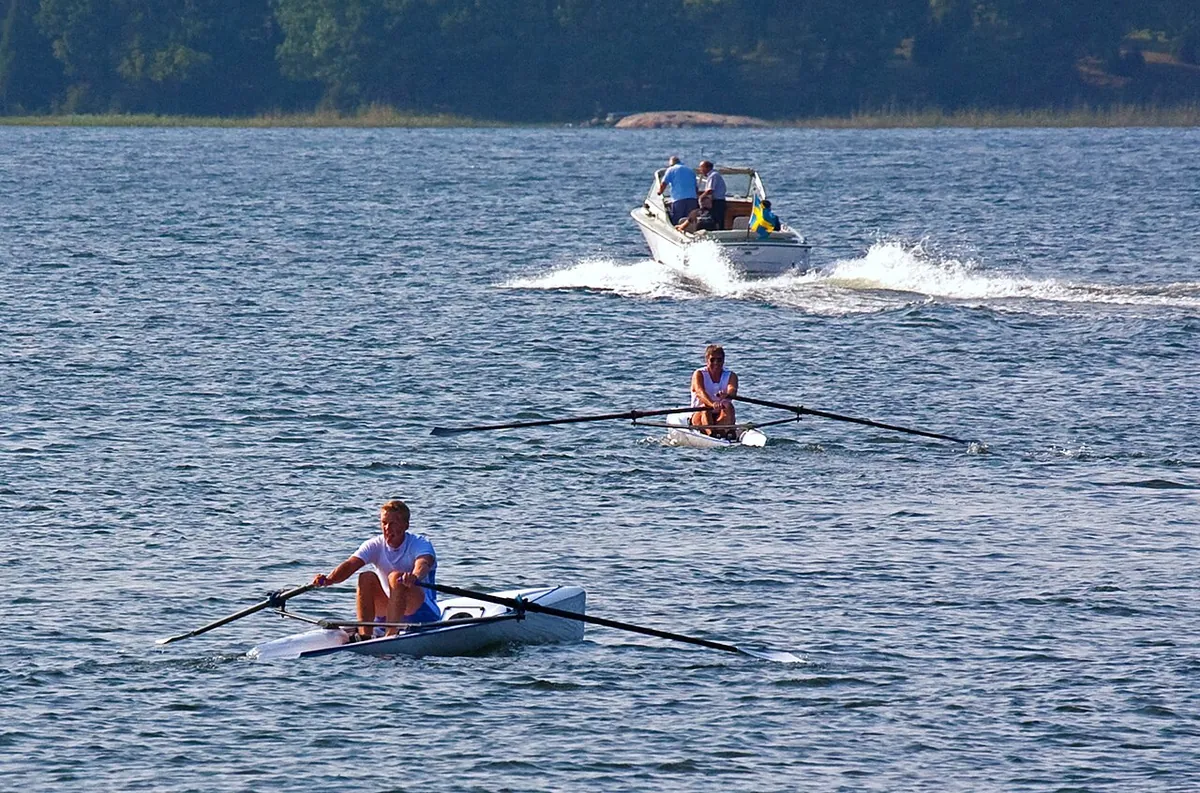
A rowing stroke can be understood through the catch, drive, finish and recovery. These are not four separate poses but linked phases that determine how continuously the boat moves. Watching only the arms pulling misses the coordination of legs, trunk and sliding seat. The complete cycle gives a more accurate explanation of propulsion and control.
The drive uses more than the arms
Once the blade establishes support in the water, the legs, trunk and arms contribute in a coordinated sequence. Pulling with the arms too early can weaken the effectiveness of the whole movement. From the side, watch the seat and body together to see whether their actions help transfer force rather than competing with one another.
A clean release
At the end of the drive, the blade leaves the water and prepares to return towards the next catch. A poor release or imbalance can disturb the hull and compromise the following stroke. Crews also need common timing because small differences between rowers can combine into an unnecessary change in the boat's rhythm.
Recovery prepares the next stroke
The recovery looks less forceful but provides the time and control needed to reset the body. Rushing the sliding seat forward can disrupt the movement of the boat. Effective rowing balances drive and recovery. Notice whether the hull continues smoothly as the athletes move, rather than judging efficiency solely by the forceful part of the cycle.