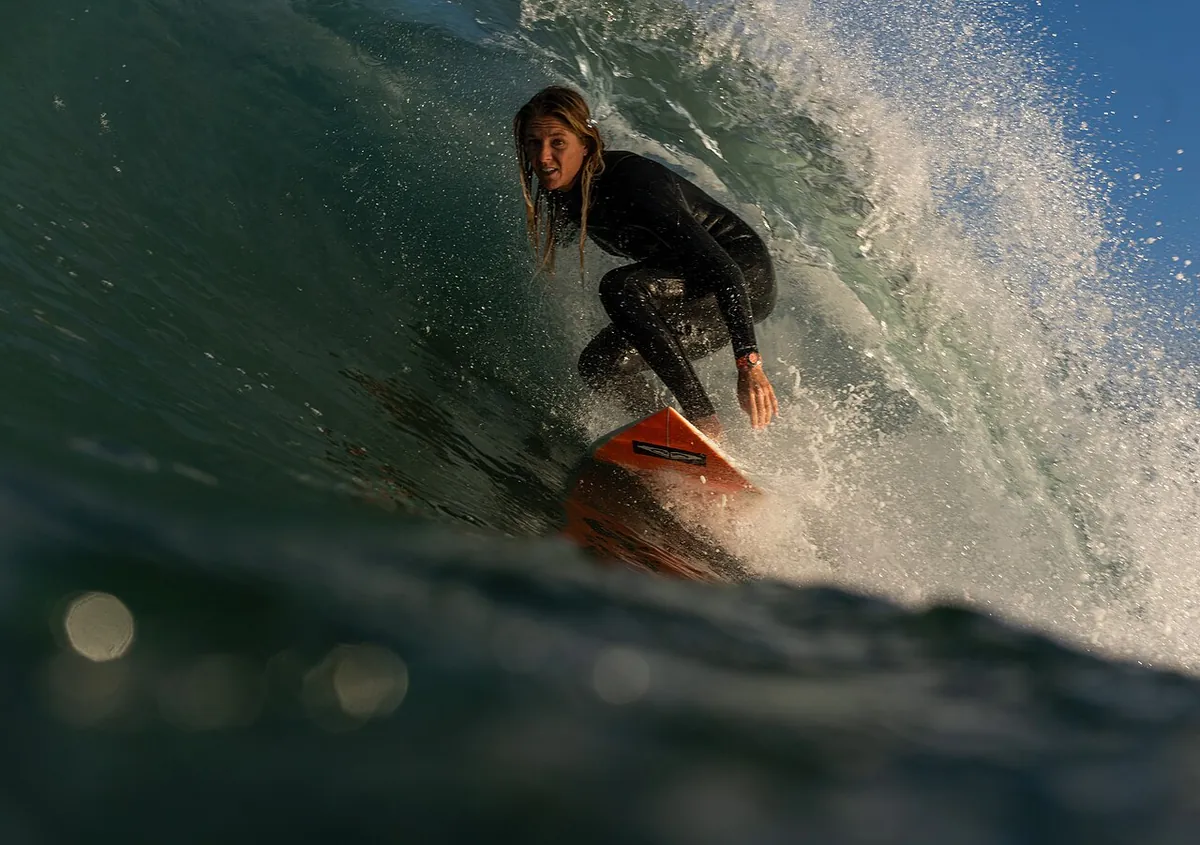
A barrel forms when the lip curls over a space in front of the wave face. The surfer may disappear from view before emerging again, but this is not passive travel followed by a hopeful exit. It demands control of position and speed inside a narrow environment that continues changing throughout the ride.
The entry is decisive
Entering too early can leave the surfer unable to match the developing space, while arriving late can miss the opening. The athlete judges the rate of breaking and their own position to decide when to accelerate or reduce speed. Watch the approach before the disappearance, rather than judging the entire attempt only by whether an exit occurs.
Depth and pace interact
A deeper position can involve greater demands, although evaluation still depends on conditions and execution. Too much speed may bring the surfer out of the useful space prematurely; too little can allow the closing wave to catch up. Posture, rail control and other adjustments serve the changing relationship between the board and the wave.
Result and process belong together
A successful exit often completes the ride more clearly, but judging also considers the full performance and applicable criteria. Barrels at different locations vary substantially, so time spent inside is not a universal ranking system. Understanding the process reveals a sequence of decisions within a natural space that cannot be reproduced exactly.