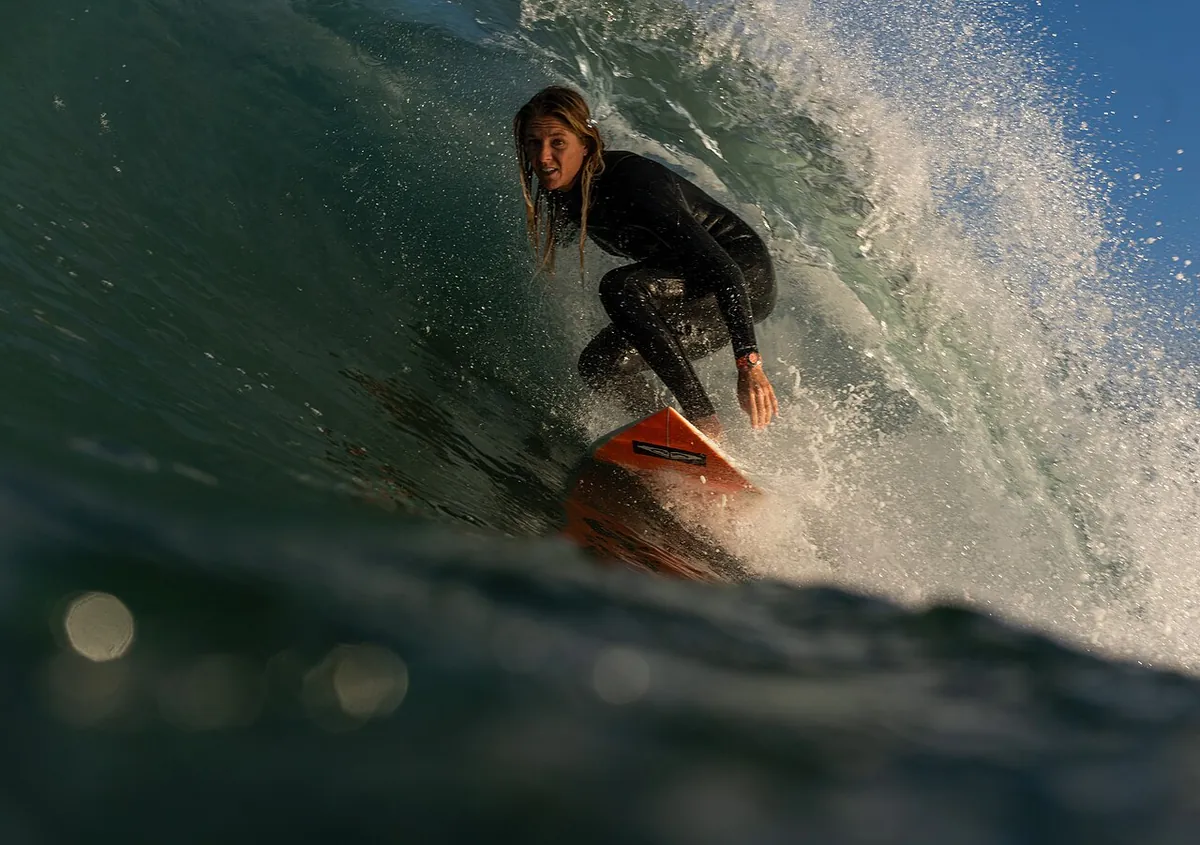
The bottom turn may attract less attention than an aerial manoeuvre, but it is central to preparing the next section of a ride. A surfer descends the face, uses the available speed and redirects the board towards a useful area. The quality of that transition influences access to the lip, a barrel or another controlled turn.
Build speed and direction together
The athlete coordinates body position, board and the curve of the wave. A turn that is too abrupt can lose speed, while one that is too shallow may miss the intended section. Body lean and rail engagement offer clues, but the clearest test is whether the exit creates a workable direction for the next action.
Placement changes with the wave
The face develops continuously, so the turn cannot be performed at one fixed point on every ride. Sometimes a deeper descent helps gather speed; elsewhere the surfer must redirect quickly before a brief opening closes. The same named manoeuvre can therefore look different without one version automatically being incorrect.
Watch the entire connection
Understanding a bottom turn requires footage from the take-off through the following manoeuvre. A clip showing only the final action at the lip can make success look like a moment of isolated power. The wider sequence reveals that line preparation, speed management and timing have already determined which opportunities are available.