Formula One can deploy a safety car or virtual safety car when a hazard requires controlled running. Both serve safety, but they do not organise the field in the same way. Understanding the difference helps explain a suddenly reduced lead or a team's decision to stop during a controlled phase rather than continue its original plan.
The physical safety car
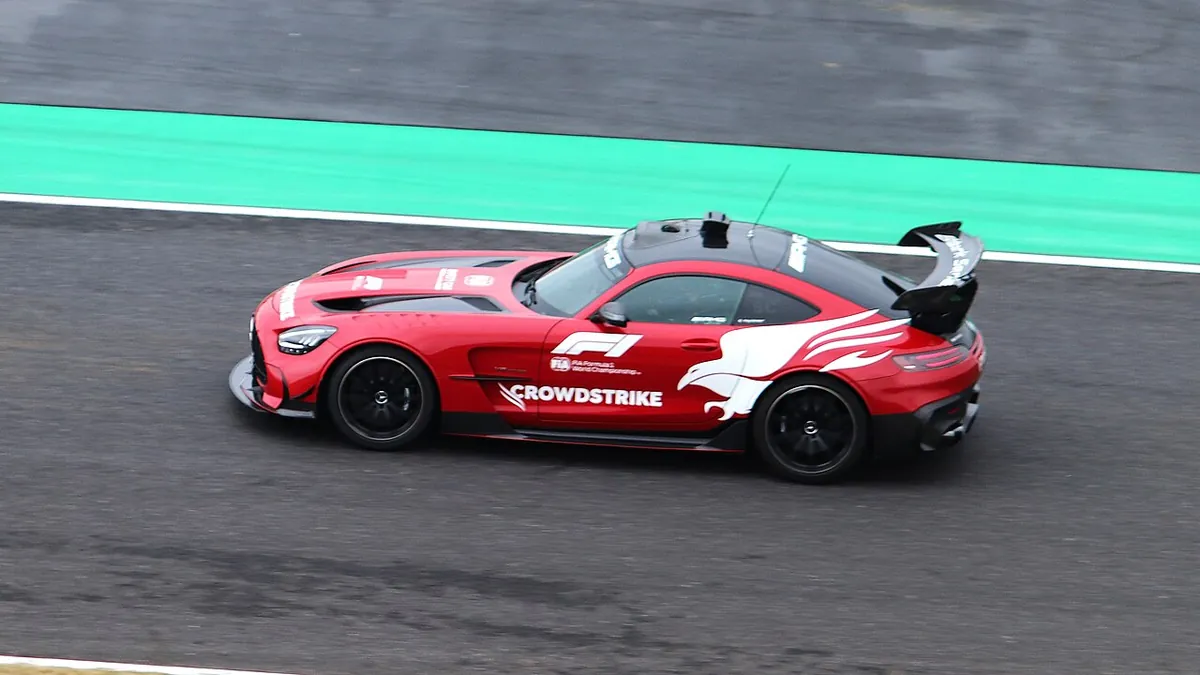
A physical safety car leads the field at a controlled pace. Cars generally gather behind it, which can compress gaps built during normal racing. The order of the queue, treatment of lapped cars and timing of the restart depend on the applicable procedures. An unusual-looking position in the queue does not itself establish a penalty or disqualification.
The virtual procedure
A virtual safety car uses prescribed speed or time references to control drivers rather than deliberately assembling them behind one vehicle. It still changes the rhythm of the race and can alter the relative cost of a pit stop. Neither procedure is a period of unrestricted competition; drivers remain bound by race-control requirements.
Preparing to restart
As racing resumes, drivers must manage tyre temperature, braking condition and their distance from the car ahead. The leader's pace and the reactions behind help shape the first acceleration. First identify the point at which overtaking is permitted, then watch how line choice and timing create or remove a passing opportunity.