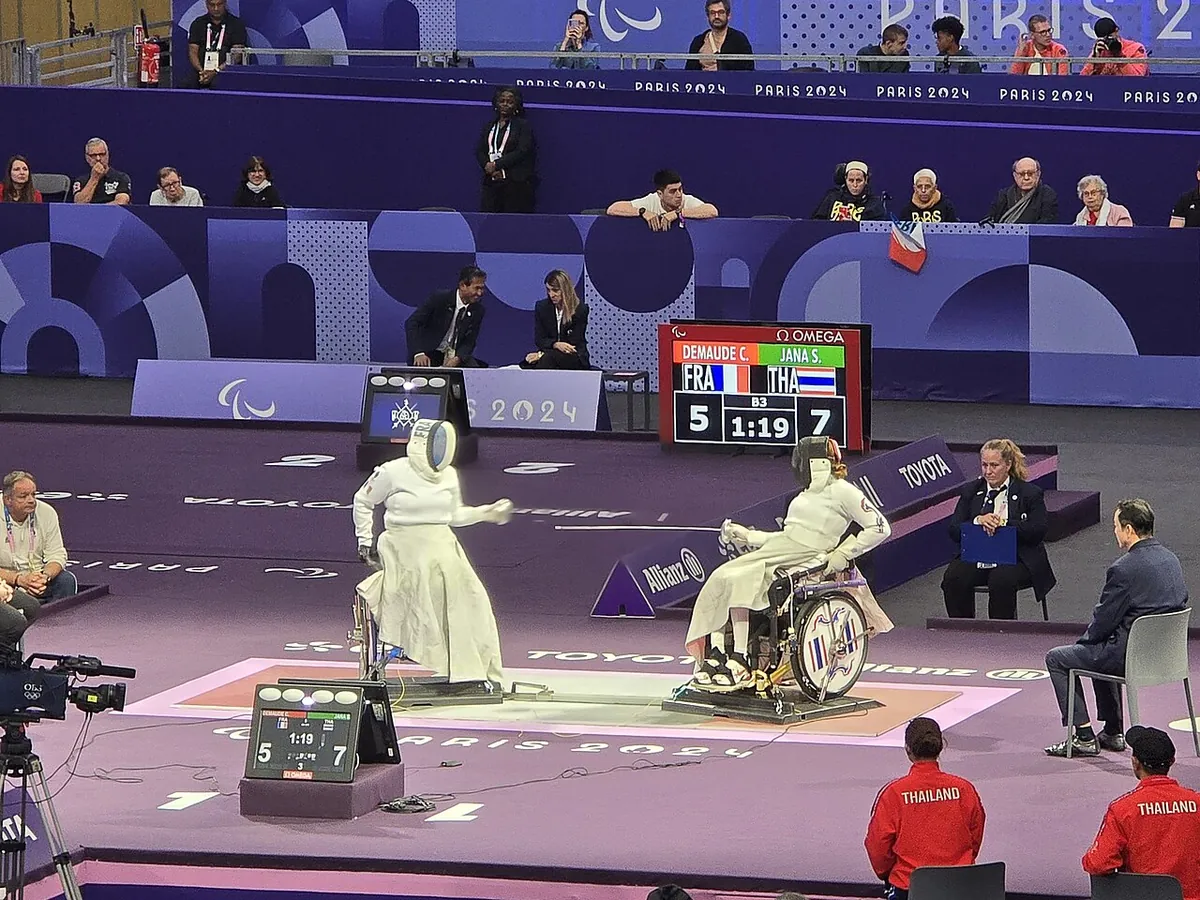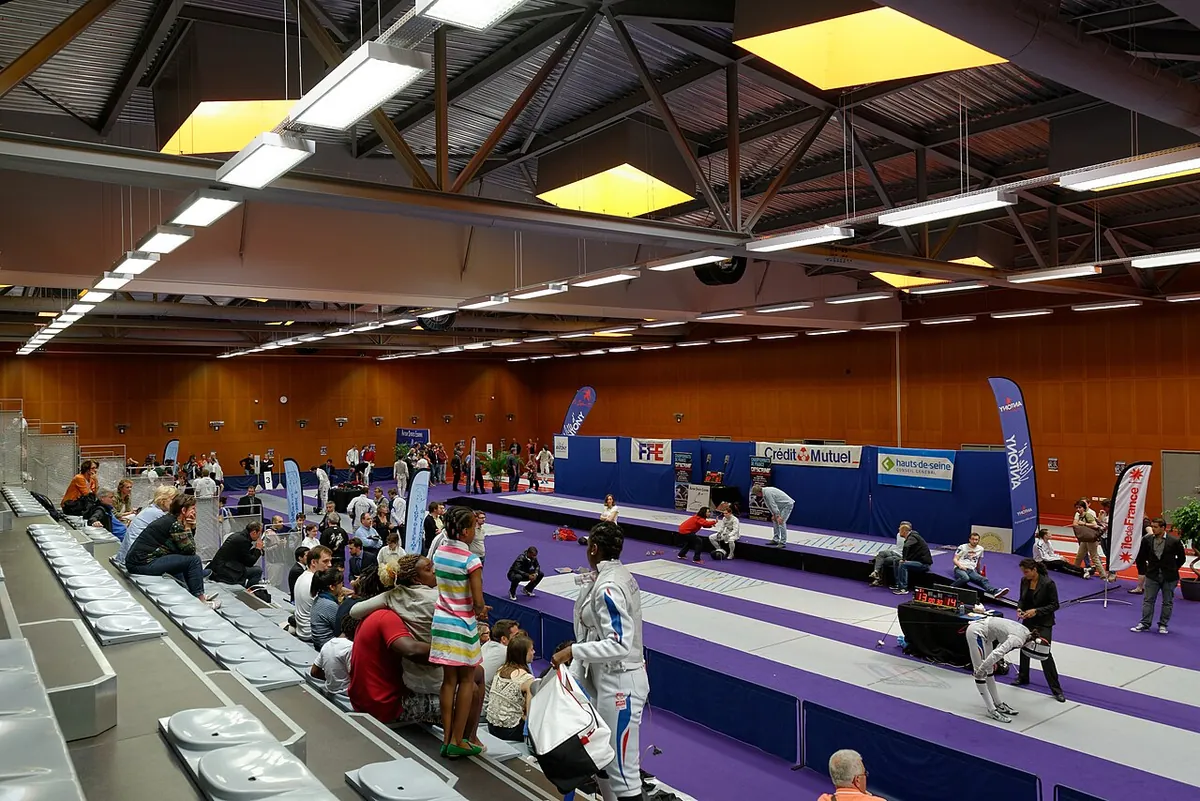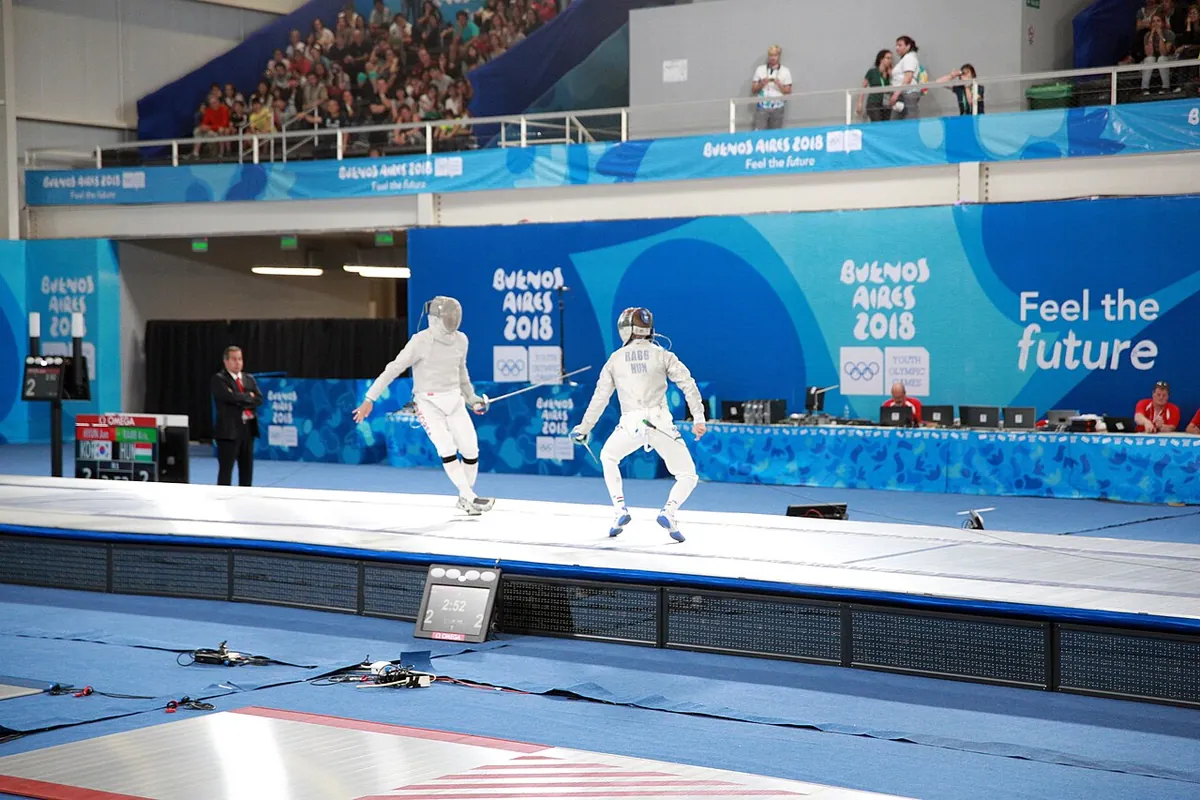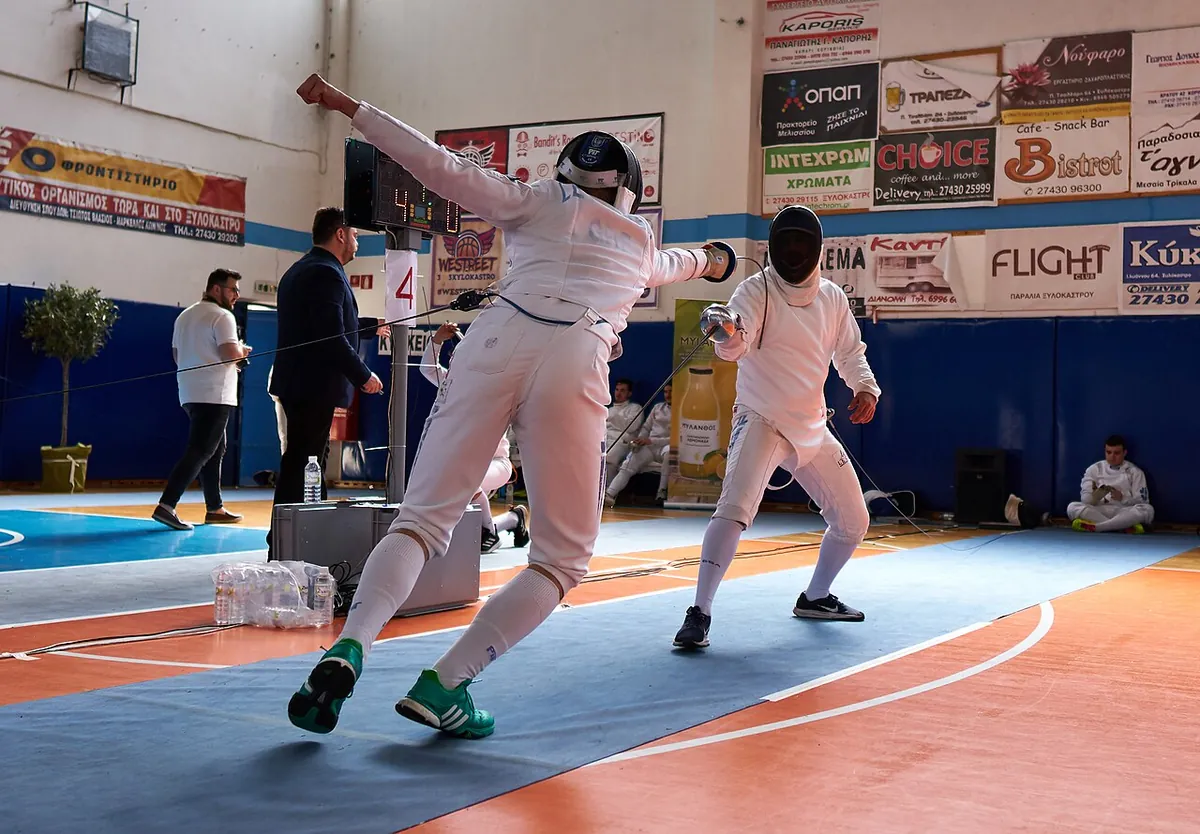
Epee awards valid thrusts under FIE rules without the attacking priority used in foil and sabre. Because the whole body is a target, the weapon hand and leading foot can become meaningful opportunities. What looks like waiting may be careful management of distance and counterattack risk rather than an absence of intent.
The nearest target changes the action
When the hand is closer than the torso, a successful attack may not require a deep lunge. Fencers judge small changes in range while protecting their own exposed targets. Watch point height and the leading foot, not only dramatic forward movement. Distant broadcast views can hide the details through which an exchange is actually created.
Double hits alter the calculation
Valid simultaneous touches within the applicable timing conditions can affect both scores. A leader and a trailing fencer may therefore value the same exchange differently. Near a decisive score or the end of time, the specific rules remain important; every pair of lights should not be mechanically interpreted without considering the competition situation.
Leading changes the risk
A leading fencer may want to avoid giving up unanswered points, while the opponent needs exchanges that change the gap. Waiting is still constrained by time and applicable non-combativity rules. Read the clock and score together. Caution is not automatically a lack of skill, and greater visible risk does not itself entitle someone to a point.