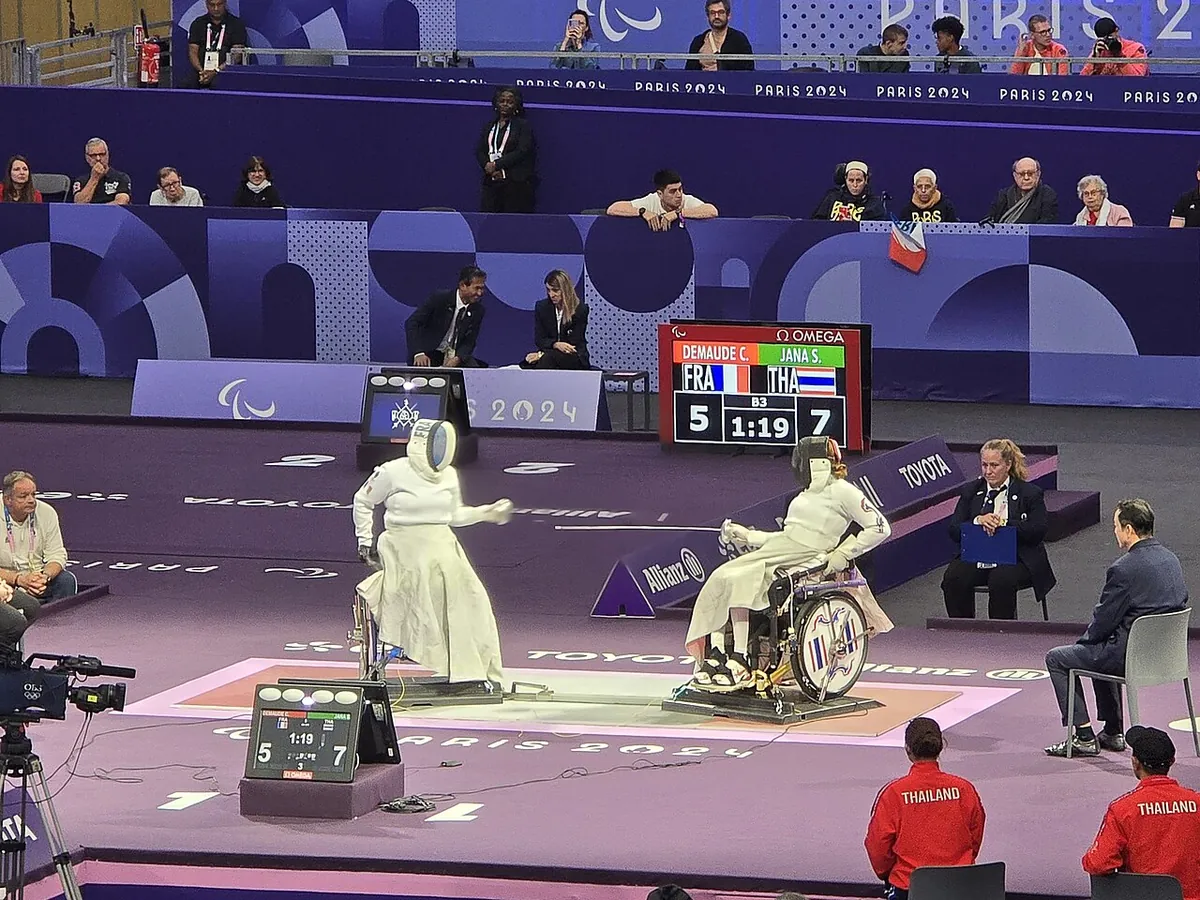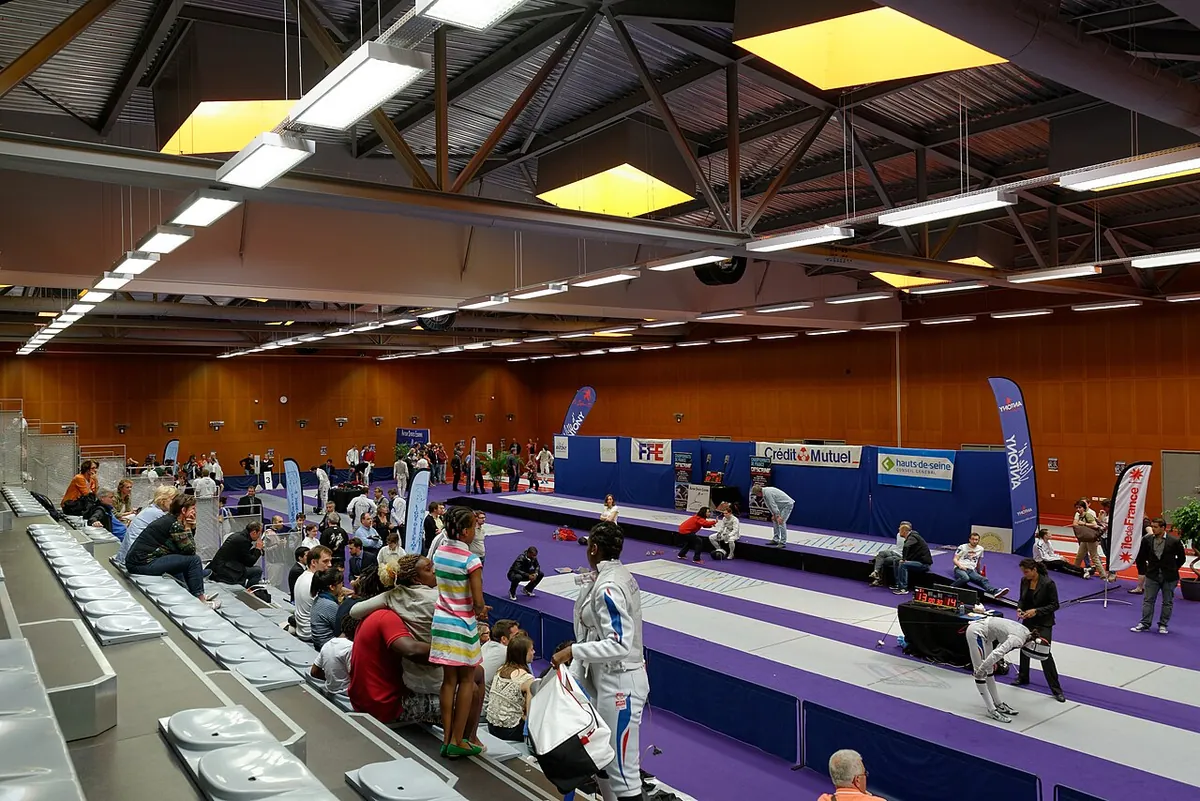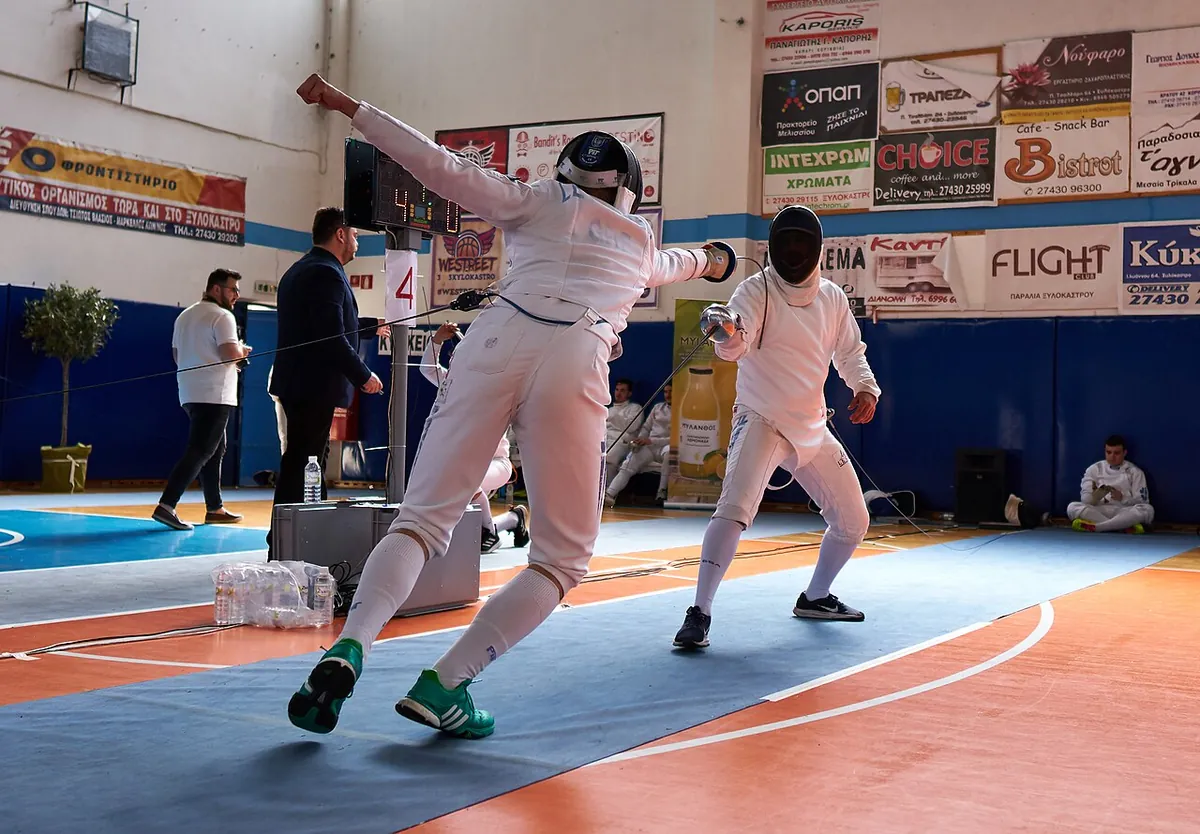
Competitive fencing uses protective equipment and an electronic scoring system. Foil and sabre have conductive target arrangements, while epee uses its own electrical conditions. The FIE specifies equipment standards and checks. These are functional parts of the contest rather than merely the familiar visual appearance of a fencer.
A signal is not an automatic decision
The apparatus registers contact that satisfies its electrical and timing conditions. The point can still depend on target area, priority, infringements or other rules. Foil off-target and valid-target signals have different meanings, and neither can be transferred unchanged to the other weapons. Read the lights first, then wait for the completed officiating decision.
Equipment checks can interrupt the action
A problem with a tip, wire or another component can lead to inspection. Whether it affects a previous score depends on the relevant procedure, not an automatic cancellation of everything before the pause. An athlete requesting a check has not necessarily established the claim. Follow the inspection outcome and official score rather than assuming unfairness from the interruption.
The target is defined by the rules
Similar-looking lights can carry different implications across weapons. Viewers need not understand every circuit detail, but should recognise that equipment serves a regulated target definition. A metallic-looking surface is not sufficient evidence that a touch there must score. Proper inspection helps preserve the comparable conditions in which the bout takes place.