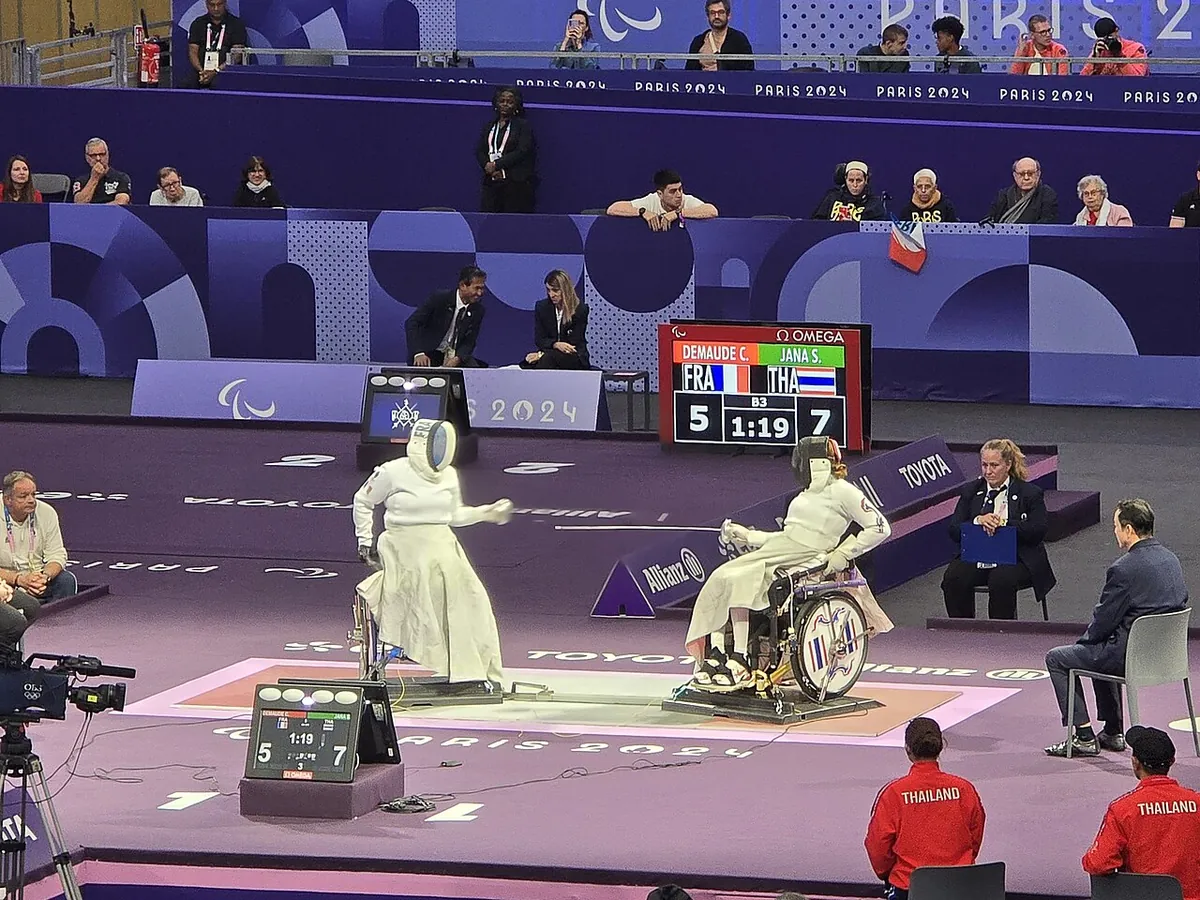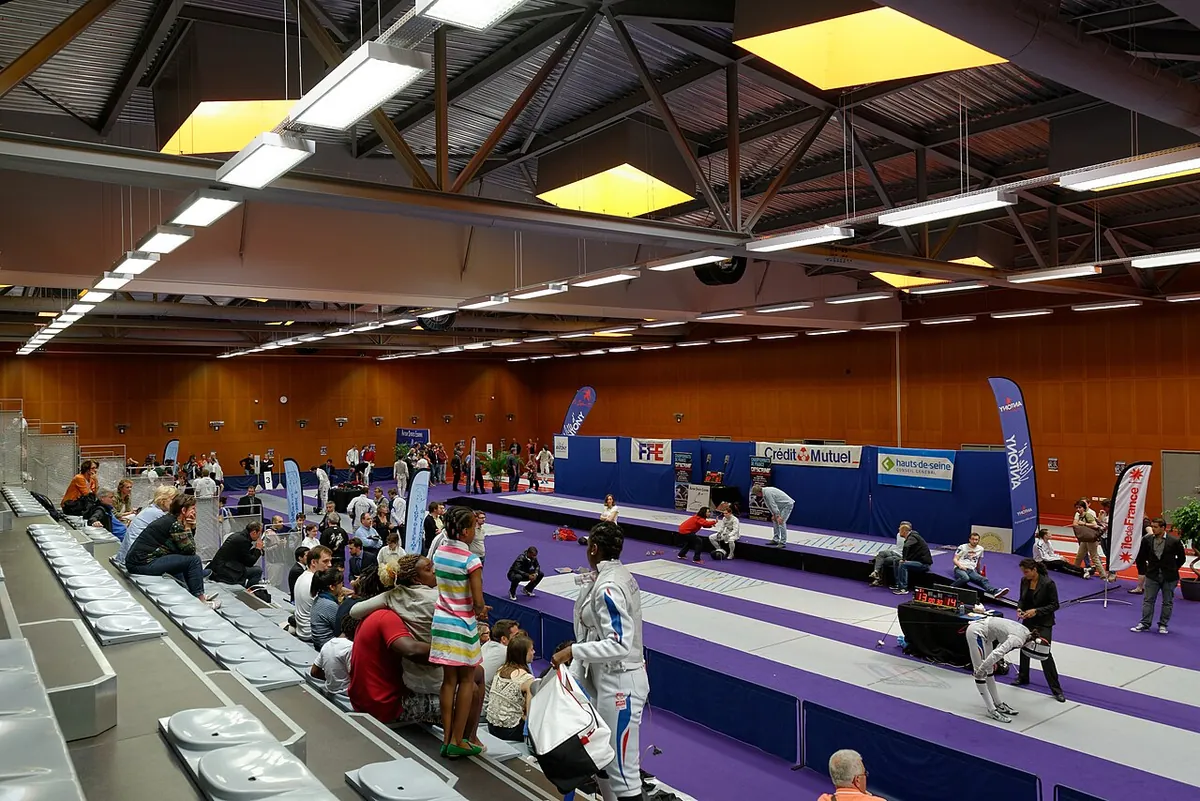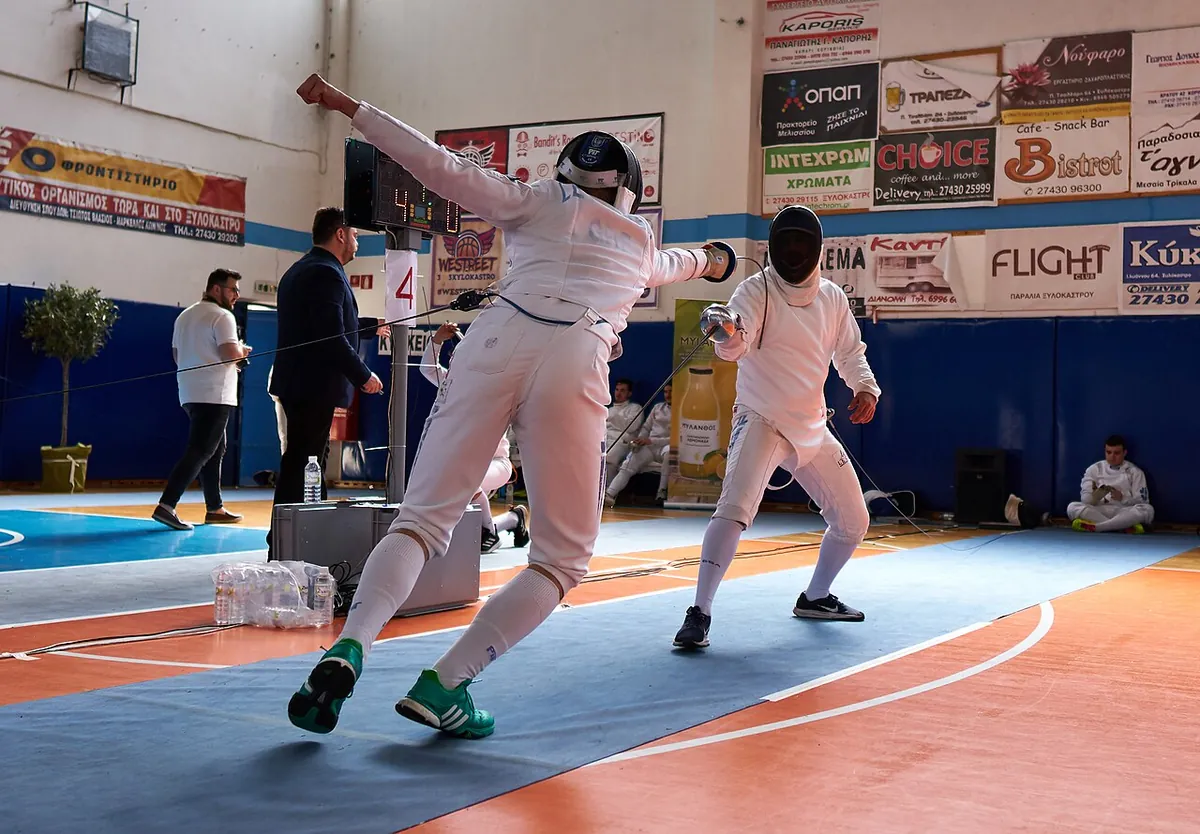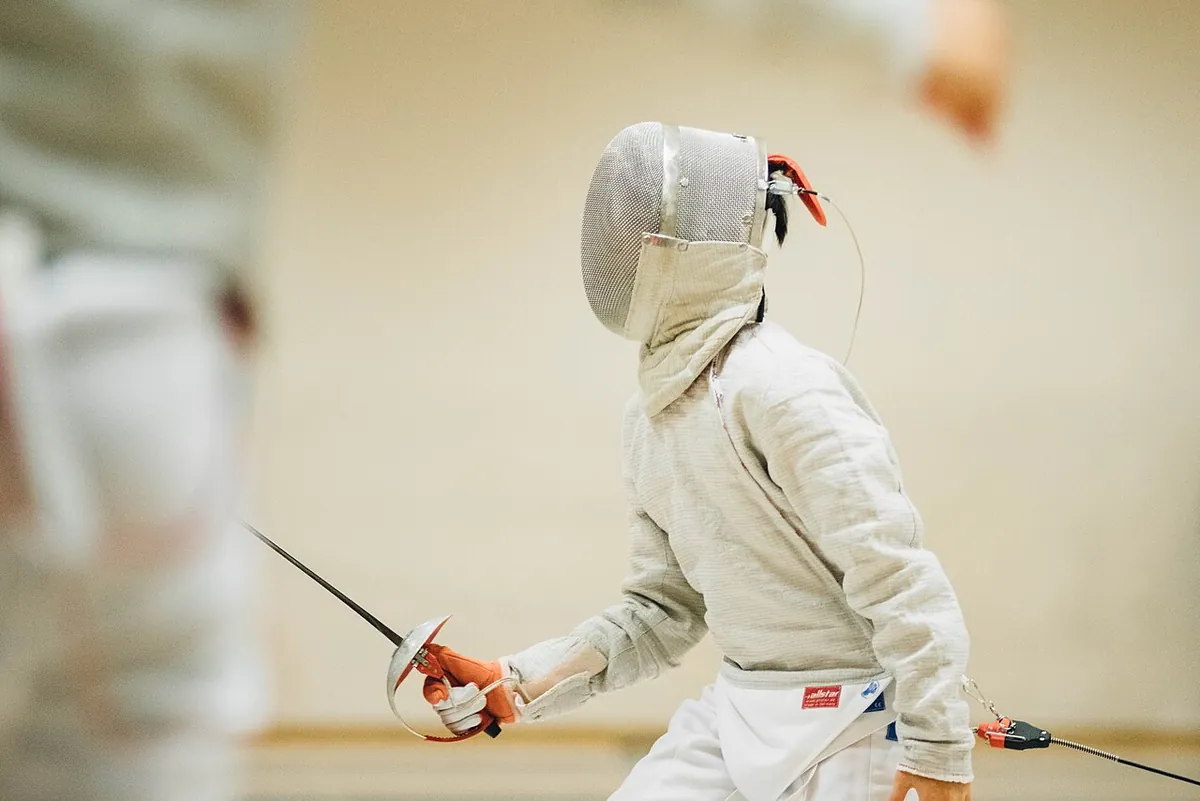
A fencing piste is narrow and long, making forward and backward distance especially influential. Footwork must coordinate with weapon movement so that an action can reach while defence remains possible. The three weapons use different rules, but distance and balance are shared foundations for understanding what happens during an exchange.
The lunge begins before the lunge
An effective final attack often depends on earlier adjustments. Too much distance leaves the target out of reach; too little can reduce useful action space. Watch how small steps alter relative positions and draw a response. The large movement at the end may simply reveal the opportunity created by several quieter changes beforehand.
Retreating can have a purpose
A retreat can remove the target from range or encourage the opponent to come farther forward. However, approaching the rear boundary reduces options. Do not count backward steps as proof of permanent passivity. Observe whether they lead to a defensive response or counterattack, then assess that result under the relevant weapon rules.
Rhythm is not a fixed beat
Fencers may advance through small steps, pause and accelerate to affect the opponent's distance judgement. Examine whether the point still threatens and the body can still adjust after each movement. A rhythm change without balance can surrender the opportunity. Controlled continuity therefore matters more than simply making the feet move frequently.