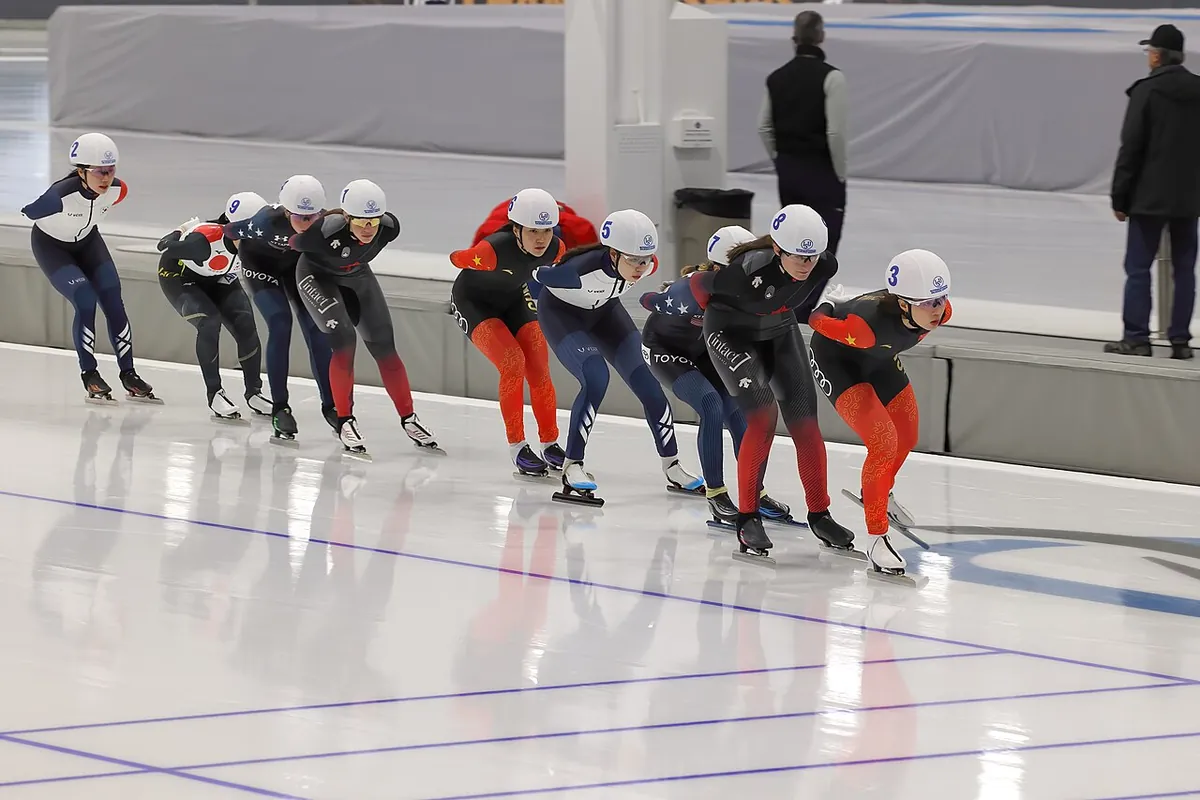
Mass-start speed skating brings several competitors onto the track together, changing the logic of long-track racing. Shelter, position and designated sprints can all matter. ISU rules define laps, points and final ranking, and formats can change. Before following the action, establish the requirements of the particular race rather than importing assumptions from a paired individual event.
Energy and position
Following another skater can reduce the cost of meeting the air, but staying too far back may close off an attacking opportunity. Competitors balance conservation against access to a useful position. As a sprint approaches, a compact group can spread rapidly, making the chosen line and available space as important as acceleration.
Sprints create separate incentives
Designated intermediate sprints can award points, while the finish has its own allocation under the rules. Riders in different positions may consequently pursue different opportunities. A spectator needs the lap counter and points display, not just the order across the line at one moment, to understand what each acceleration contributes to the final outcome.
Still a long-track discipline
The presence of direct positional racing does not make mass start a short-track event. Track dimensions, distances and competition procedures remain different. Contact, obstruction and penalties should be interpreted through the appropriate regulations and official decisions, using the full sequence of an incident rather than one isolated camera view.