The 500 metres gives starts and acceleration particular importance, but it is not one uninterrupted sprinting motion from the gun to the line. A skater must build speed from rest, then transition into efficient gliding and cornering. Losing balance or rhythm at any point can affect the remainder, even when the visible mistake lasts only briefly.
The opening steps
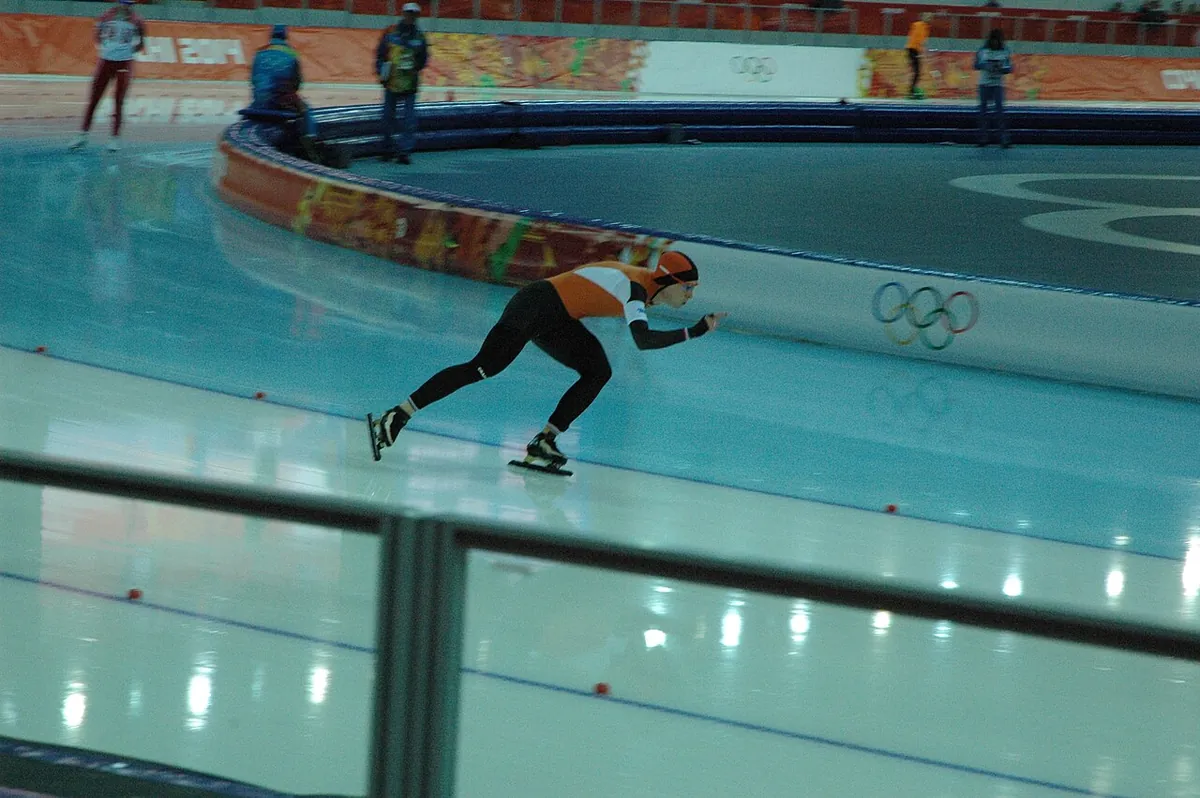
Short, forceful steps create acceleration before the skater gradually lengthens the glide and adjusts posture. This transition needs power without allowing the blade to slip. A side-on view reveals how the stepping rhythm changes and whether the body keeps progressing forward rather than moving excessively up and down during the acceleration.
The bend is active work
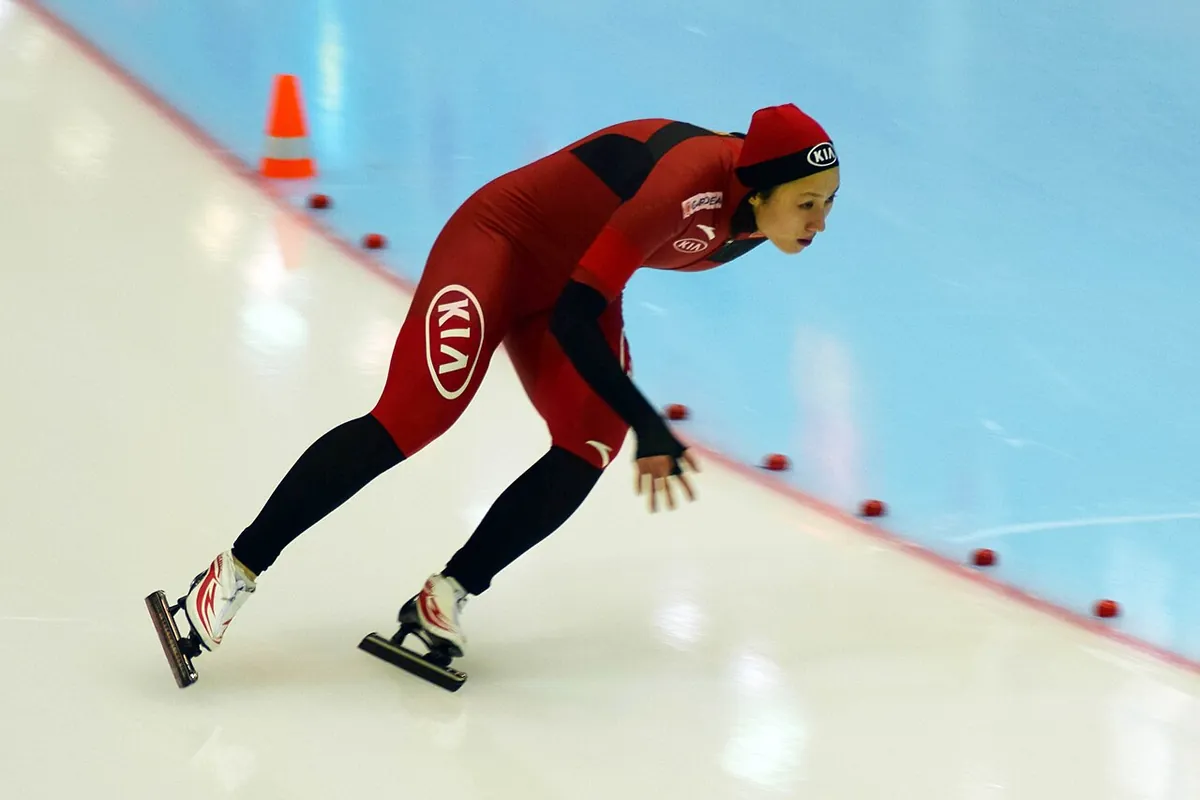
At speed, the skater leans into the bend while continuing to generate propulsion. Inside and outside lanes present different arcs and positions. The bend is therefore not a rest between straight-line efforts. A break in balance or timing can reduce the speed carried onto the straight, where it may be difficult to recover the lost time.
Check the historical format
The 500-metre competition format has changed during its history. Before interpreting an older result, establish whether it used one race or a combined result from multiple races. Champion times and records should be described with that context. Subtracting two numbers from different formats does not necessarily compare equivalent competitive tasks.