Long-track team pursuit turns individual skating ability into a collective task. The skaters must maintain an effective formation and complete the race in the required way. This guide uses the traditional ISU team-pursuit viewing framework; the entered team size, distance and progression rules should always be checked against the particular event and season.
Formation reduces resistance
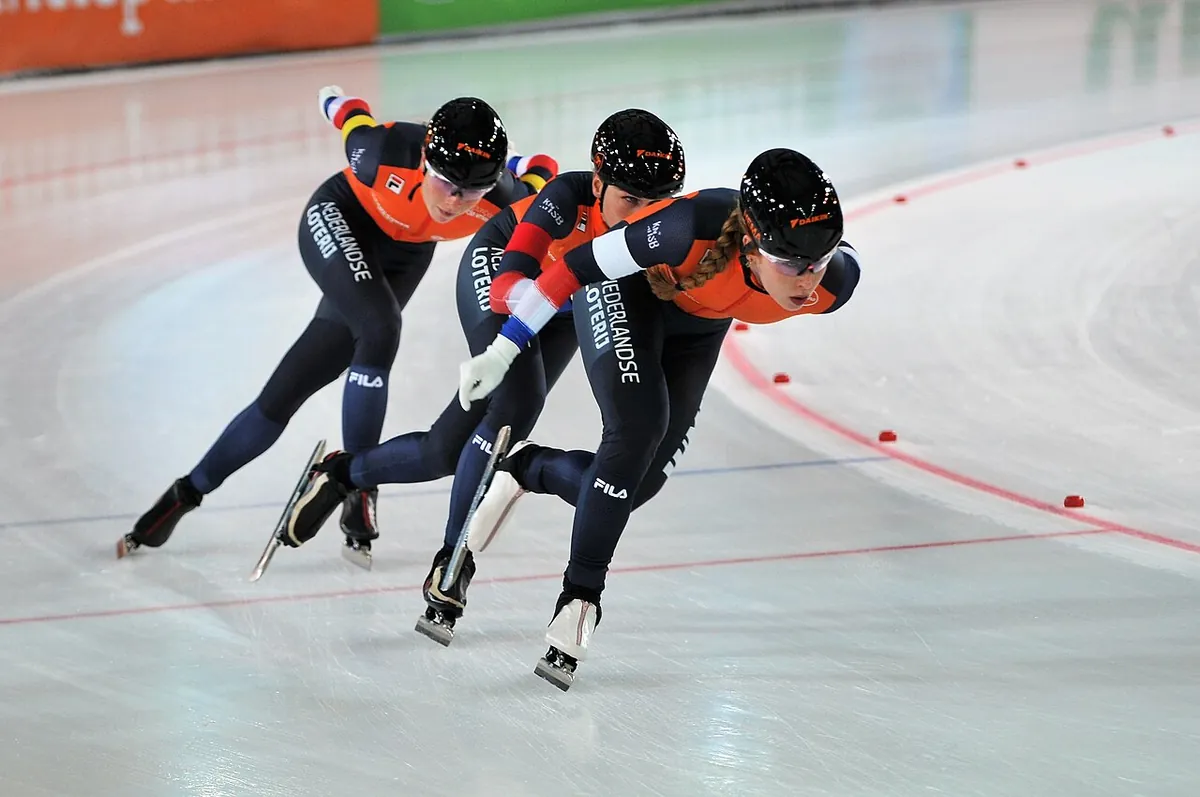
The leading skater meets more air resistance, while teammates behind can benefit from shelter. Position and leading duties therefore matter. However, riding very close is not an objective independent of safety and timing. The formation must leave enough control and reaction space to prevent one small loss of balance from disrupting the entire team.
A shared sustainable pace
If the front skater moves beyond the others' capacity, gaps can appear and weaken the result. The objective is not for everyone to produce an isolated maximum effort, but to establish the fastest speed they can sustain together. Watch spacing through transitions between straights and bends, where a coordinated group should avoid repeatedly stretching apart.
What decides the result
In the traditional three-skater format, the last team member's arrival matters rather than only the leader's. Elimination races can also involve rules about catching the opposing team. Checking these conditions explains why a team protects its formation until the finish, and why the first skater crossing a visible line does not tell the whole story.