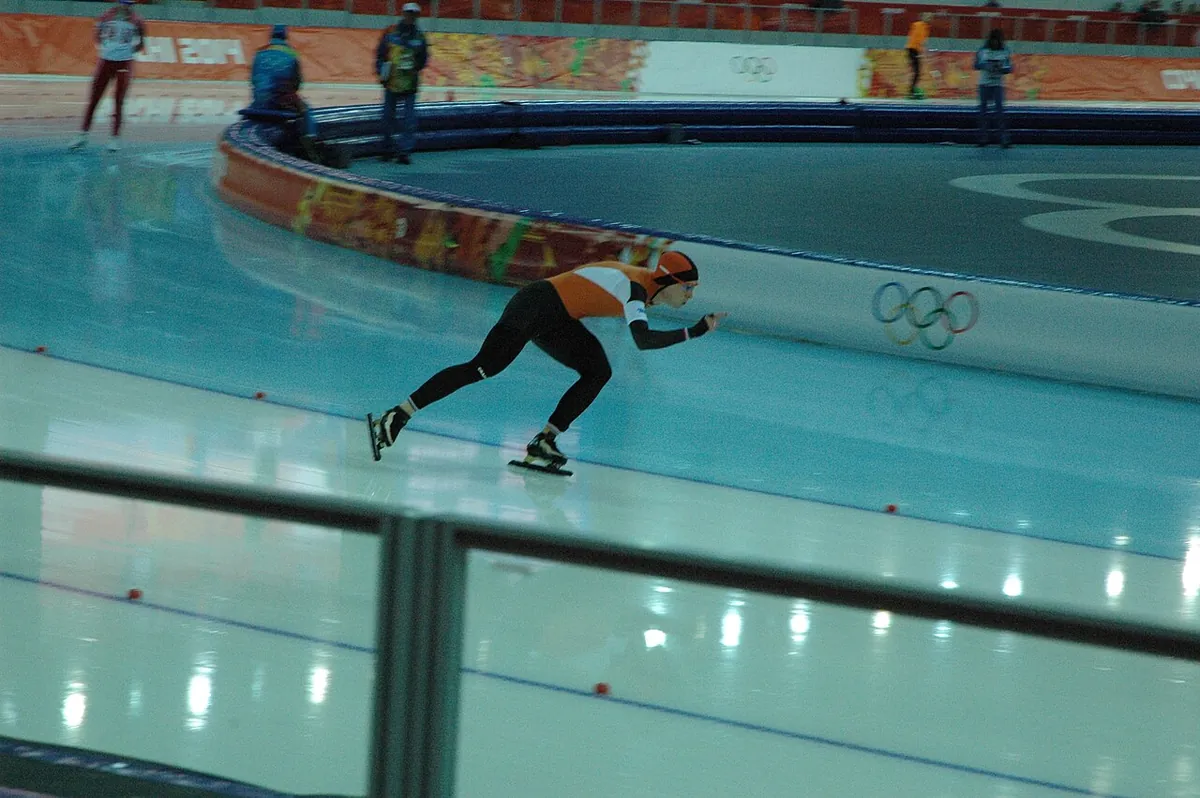
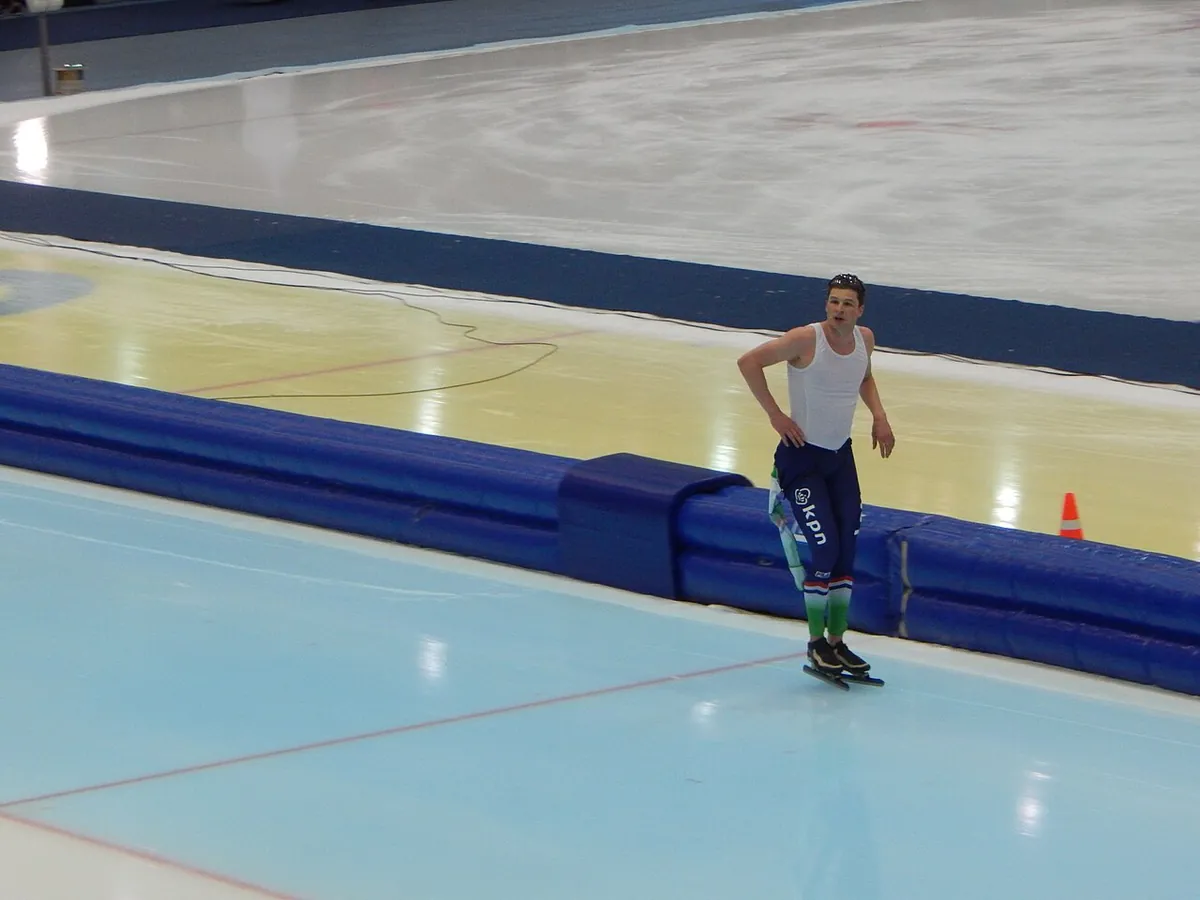
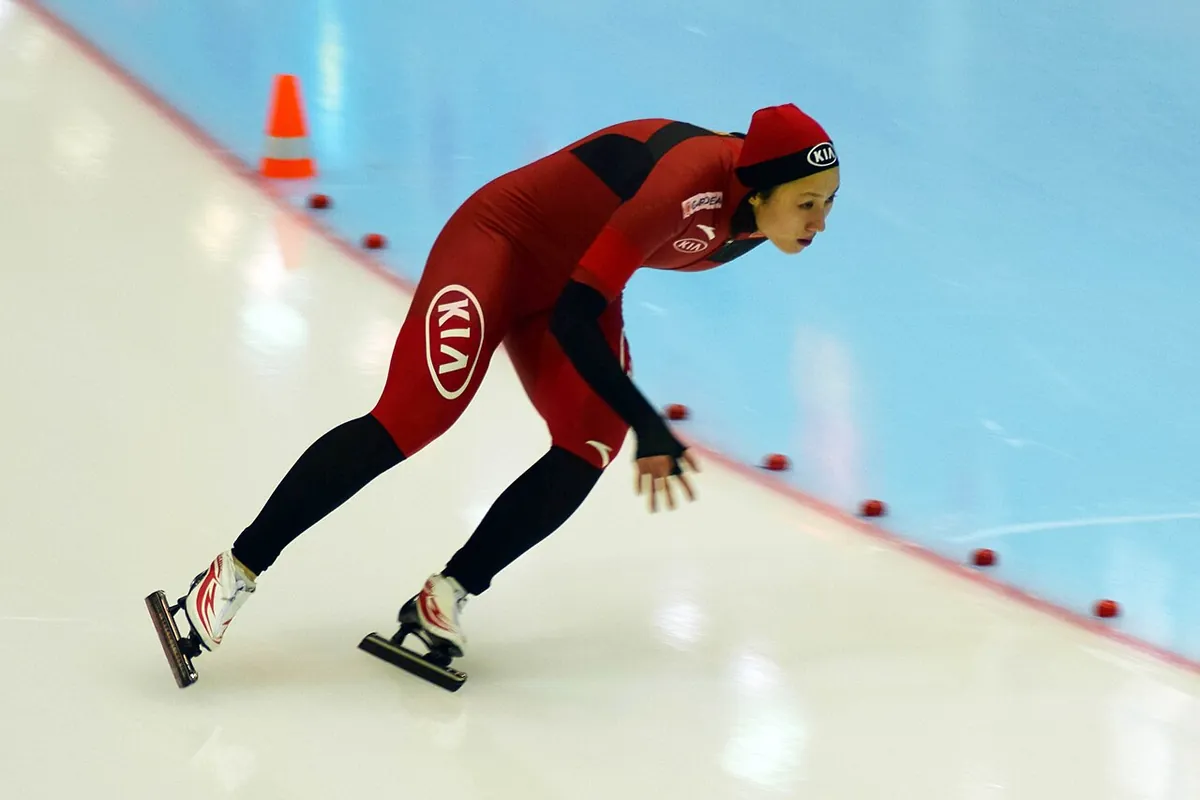
Long-track individual events commonly take place on an oval, with skaters starting in pairs and exchanging inside and outside lanes as required. Because the two bends cover different distances, this exchange is fundamental to the race. This guide concerns the usual ISU individual long-track format, rather than applying its procedures to mass start or short-track events.
Balancing the distance
The outside route around a bend is longer than the inside route. Remaining in one lane throughout would therefore produce a different distance. Prescribed exchanges address that problem. Watch the designated crossing area and understand the movement as part of completing the course, rather than automatically interpreting two skaters crossing paths as an overtaking battle.
The crossing has rules
When skaters meet at the exchange, a defined right-of-way procedure applies. A competitor cannot simply choose a path according to who appears slightly ahead. Officials assess correct lane use and obstruction. A fast time is only valid if the distance and required procedures are completed legally, making concentration an important element of performance.
The pair is not the whole field
Sharing a start organises the race, but final individual rankings normally compare valid times across all competitors. Beating a partner does not guarantee victory overall, and finishing behind a partner can still produce a medal. Read the immediate pair alongside the complete leaderboard to understand what the time actually achieves.